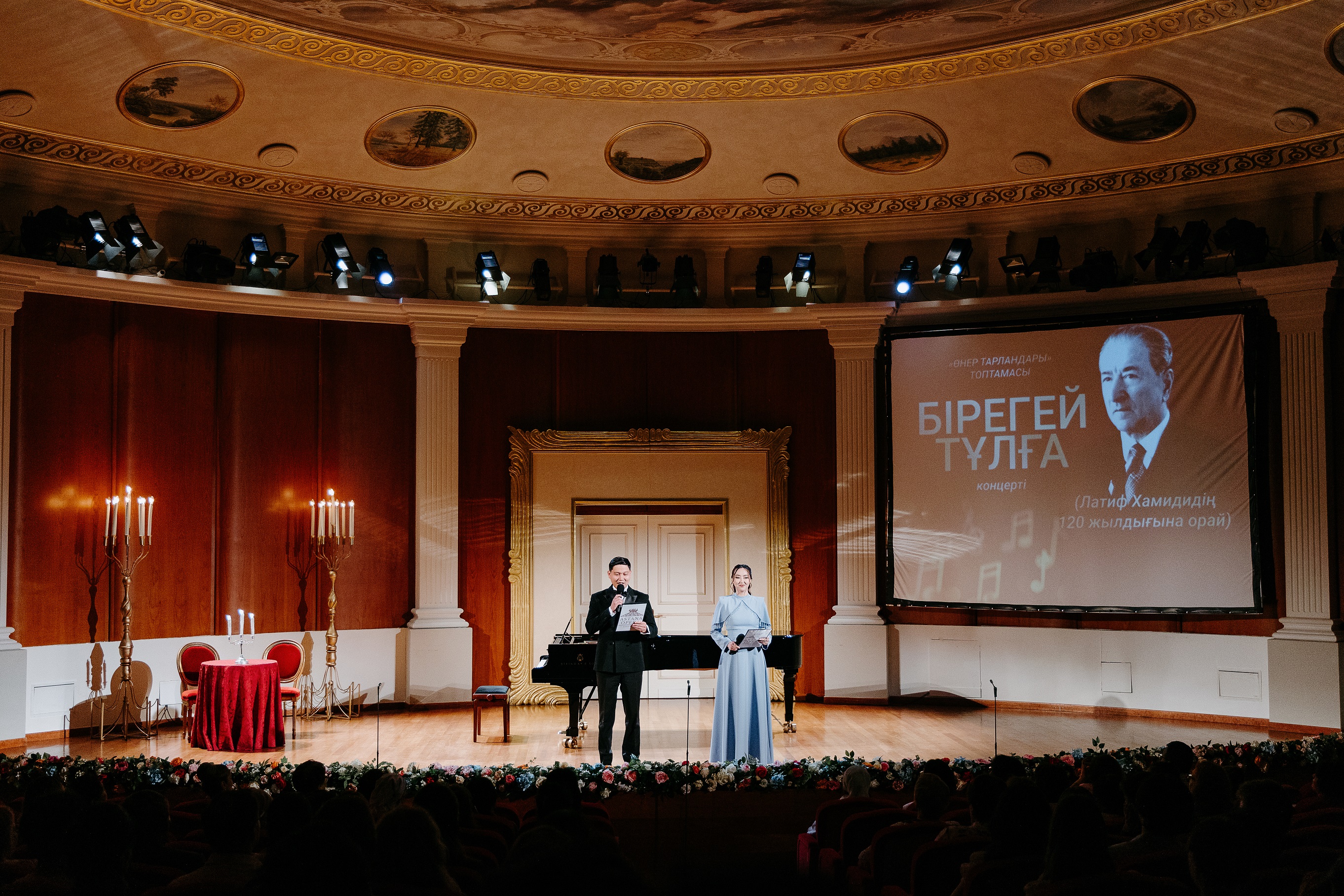
The Astana Opera commemorates Latif Khamidi’s 120th Anniversary: Biregei Tulgha, a concert dedicated to the 120th anniversary of the distinguished composer, People’s Artist of Kazakhstan Latif Khamidi, was held to resounding success on 18 June at the Kulyash Baiseitova Chamber Hall. Organised as part of the Oner Tarlandary series and the Operaliya International Festival, the musical evening drew dedicated connoisseurs of national art.
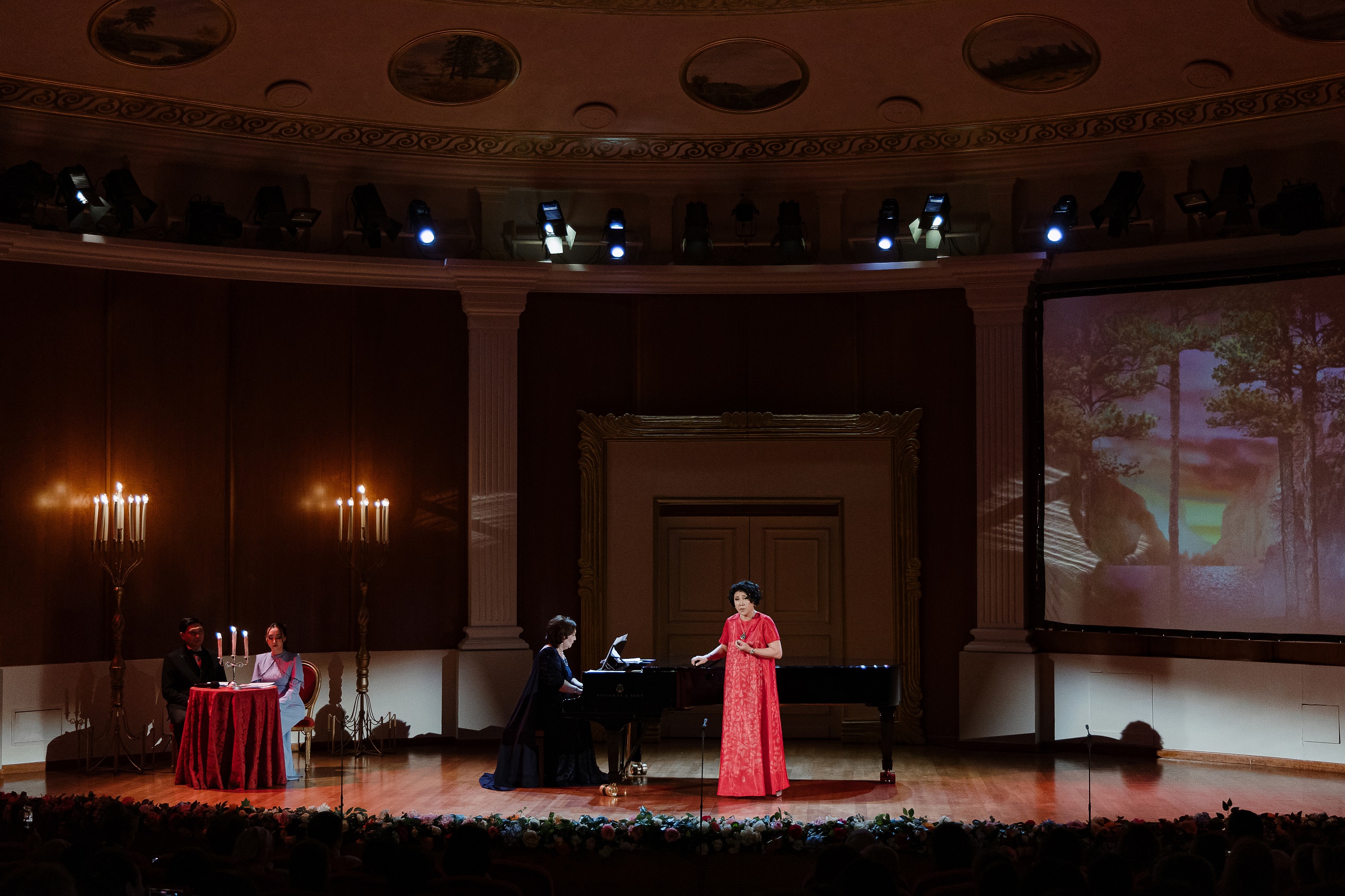
The music of Latif Khamidi served as a profound reflection of the breadth and versatility of his talent. The evening featured performances by opera soloists including Honoured Artist of Kazakhstan Zhannat Baktay, Honoured Worker of Kazakhstan Zhanat Shybykbayev, and recipient of the Order of Qurmet Aizada Kaponova, alongside Madina Islamova, Leila Alamanova, Artur Gabdiyev, Bolat Yessimkhanov, Sultan Bakytzhan, and Maryam Galiyeva.
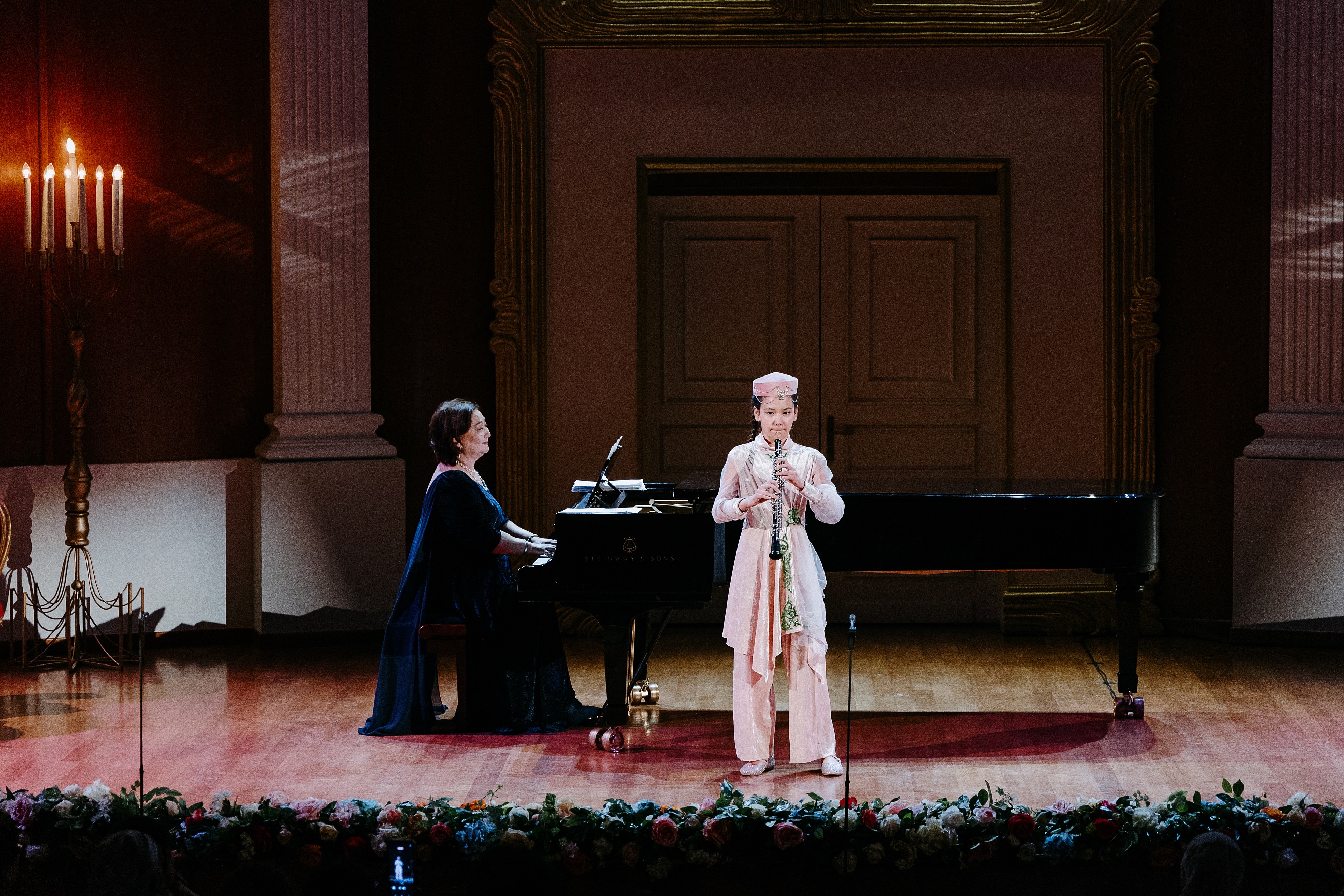
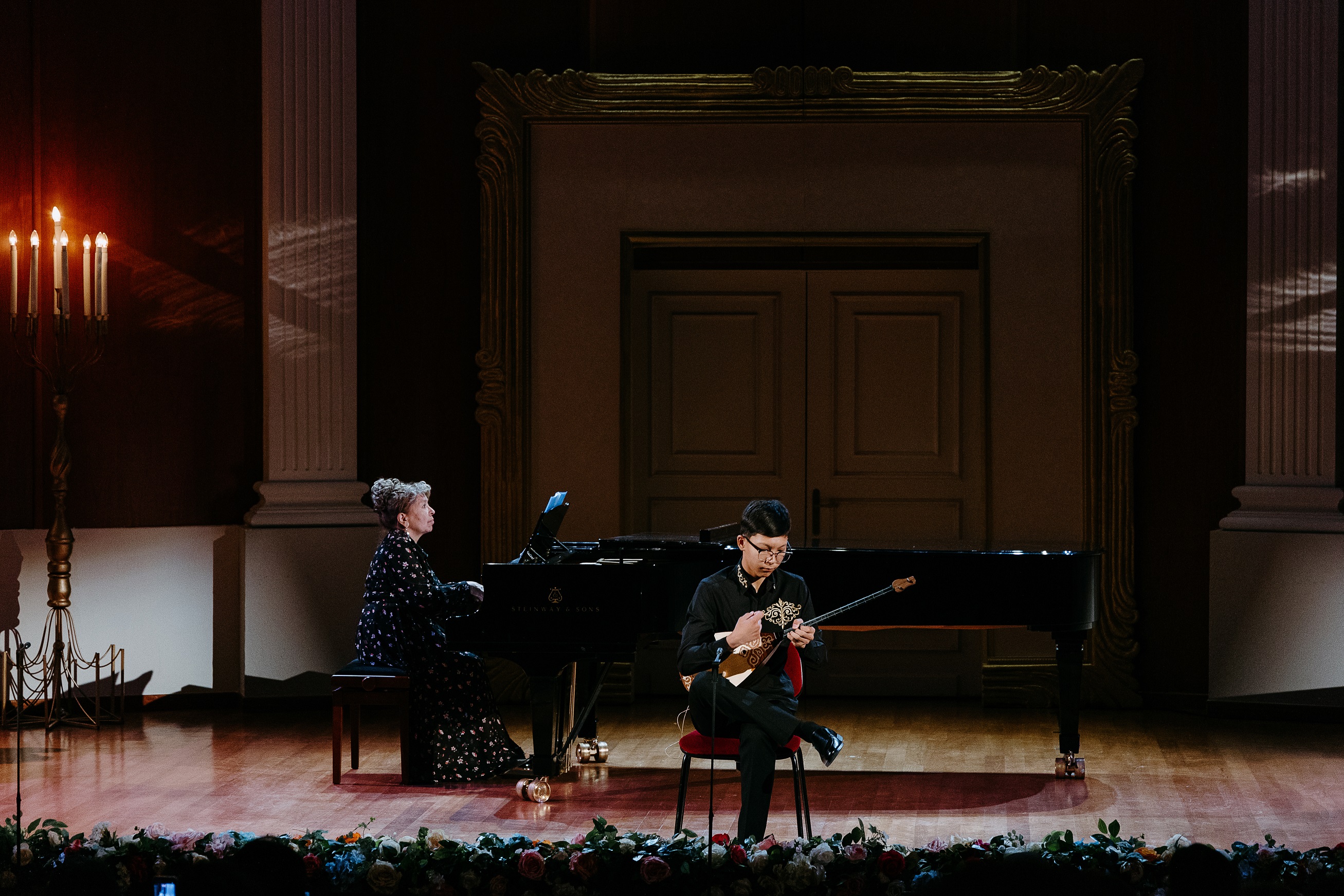
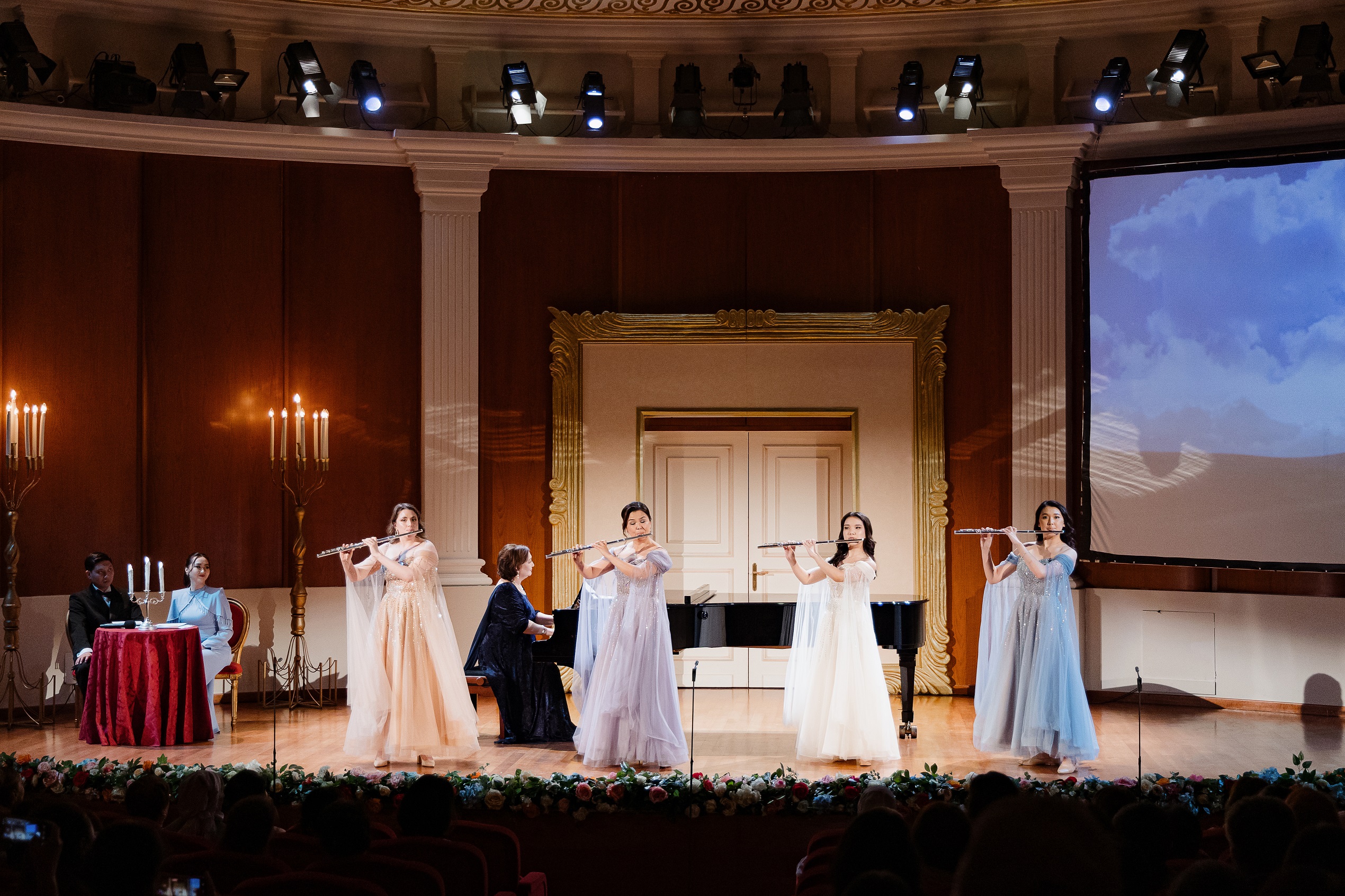
The composer’s instrumental works were performed by principal bassoon Asset Neldybayev, the young oboist Indira Iglikova (from the class of Damilya Makhpirova), and dombyra player Tolegen Nurkhan (from the class of Gulperizat Ultarakhova). They were joined by the Kairolla Zhumakenov Flute Ensemble (under the artistic direction of Zhibek Sapargaliyeva) and a duo featuring Mariam Galiyeva and Ravil Galkeyev (button accordion) from the Tan Tatar-Bashkir Cultural Centre. Piano accompaniment was provided by Honoured Worker of Kazakhstan Raushan Beskembirova, who also performed several pieces from Khamidi’s celebrated collection, Ten Kuis for Piano.
The evening’s programme encompassed the finest of the master’s creative legacy. The audience received the legendary “Kazakh Waltz” and the poignant “Bulbul” with immense warmth. Aizada Kaponova performed the lyrical song “Zhailauym Baqsha Zhainaghan”, while Maryam Galiyeva presented “The First Waltz”, and Zhannat Baktay delivered a moving interpretation of “Zhazghy Tanda”. These compositions, which once represented a bold evolutionary step for national music, remain benchmarks of melodic elegance and refinement. A dedicated chapter of the evening was focused on songs set to the poetry of Abai. Furthermore, the audience was presented with arrangements by Khamidi of works by Akhmet Zhubanov, performed by the opera company soloists. This musical intersection beautifully highlighted the close creative bond between the two masters, who famously co-wrote the monumental opera Abai.
Born on 17 July 1906 in the village of Buvali in the Kazan Governorate (modern-day Tatarstan) to a modest family, Latif Khamidi displayed early musical aptitude. He went on to study at the Tashkent Institute of Enlightenment and the Tatar Opera Studio at the Moscow Conservatory. His commitment to the deep study of traditional music led him to Almaty in 1933, where he began documenting and arranging folk songs, recognising in them the true spirit of the steppe people.
His contribution to the development of Kazakh culture is truly invaluable. Widely celebrated as the ‘King of the Kazakh Waltz’, Khamidi stood at the very threshold of the nation’s professional school of composition. Through his works, he elevated the dombyra to the status of a virtuosic solo instrument, while his polyphonic choral harmonies represented a groundbreaking innovation, seamlessly blending folk traditions with academic rigour.
The evening concluded with a prolonged standing ovation, confirming that Latif Khamidi’s waltzes, songs, and instrumental works remain profoundly relevant today.
“I am deeply grateful to the organisers for an evening that inspires immense pride that we have such works; it leaves one eager to return to these classics time and time again,” remarked audience member Chulpan Yunussova.


«Cultural Legacy Fund»
FOUNDATION FOR CULTURE AND CREATIVE INDUSTRIES

Contact information
For more information, to contact us or to apply for participation in the programs, you can use the following contacts:
Public Fund for the Support of Culture and Creative Industry «Cultural Legacy Fund».
Address: Astana, Yesil District, Mangilik El Avenue, Building 55/22, Block C 4.3., Office 246.
E-mail: info@culturallegacyfund.kz, Impresario@culturallegacyfund.kz
Stay connected
Follow our website and social media to stay up to date with new programs, opportunities, and cultural initiatives from the Cultural Legacy Fund.
Developer of LLP "TORUS.KZ"
© 2025 All rights reserved
© 2025 All rights reserved