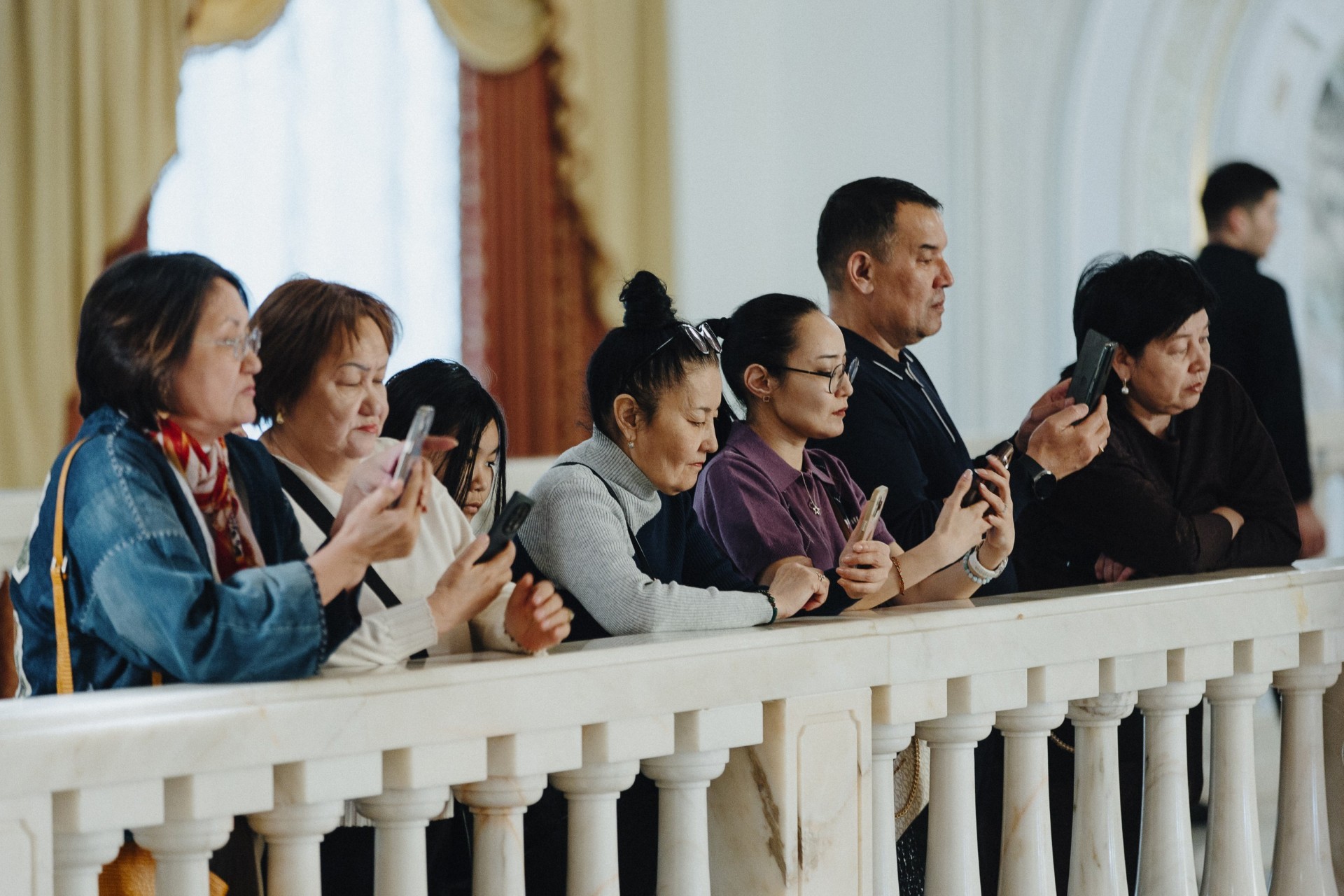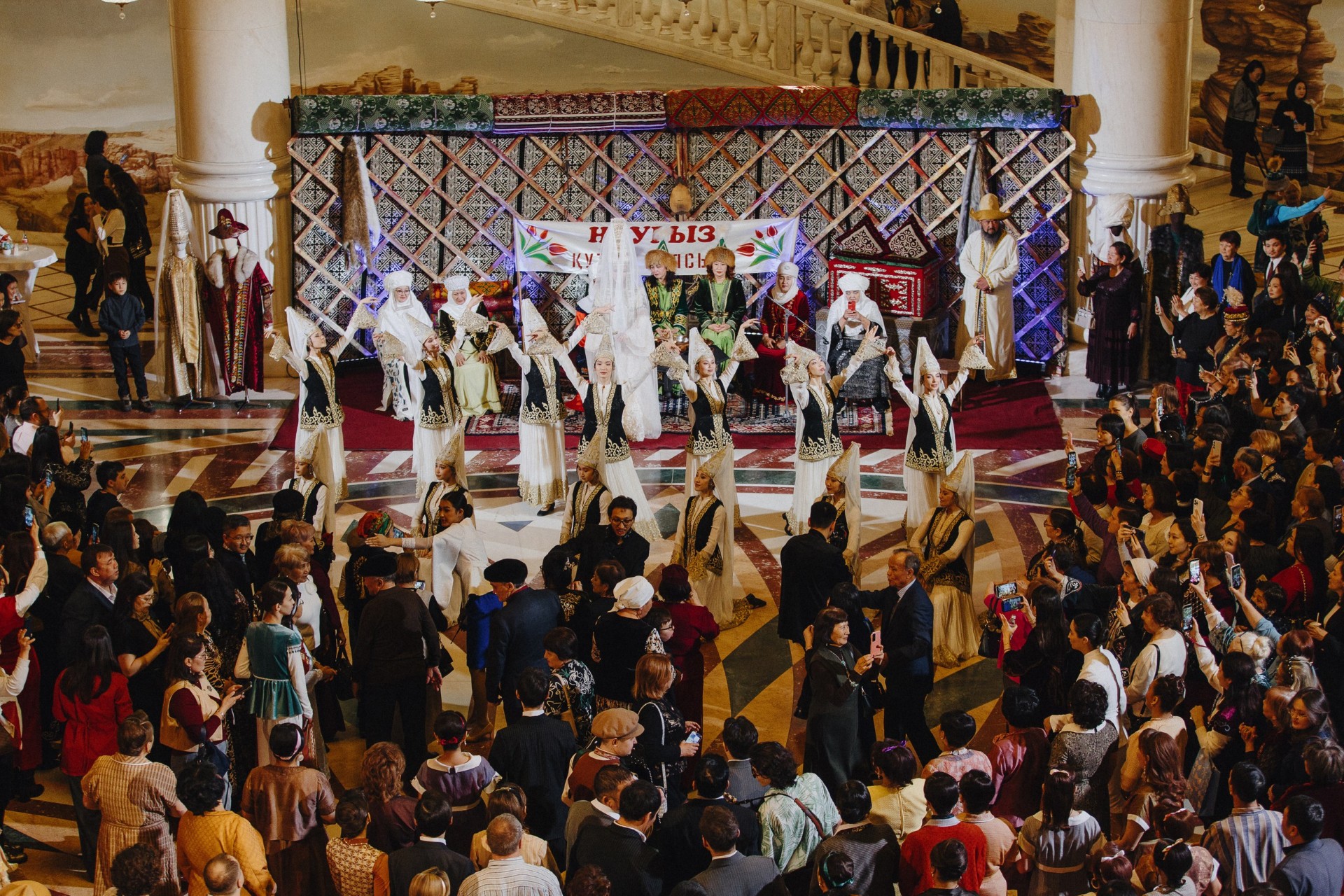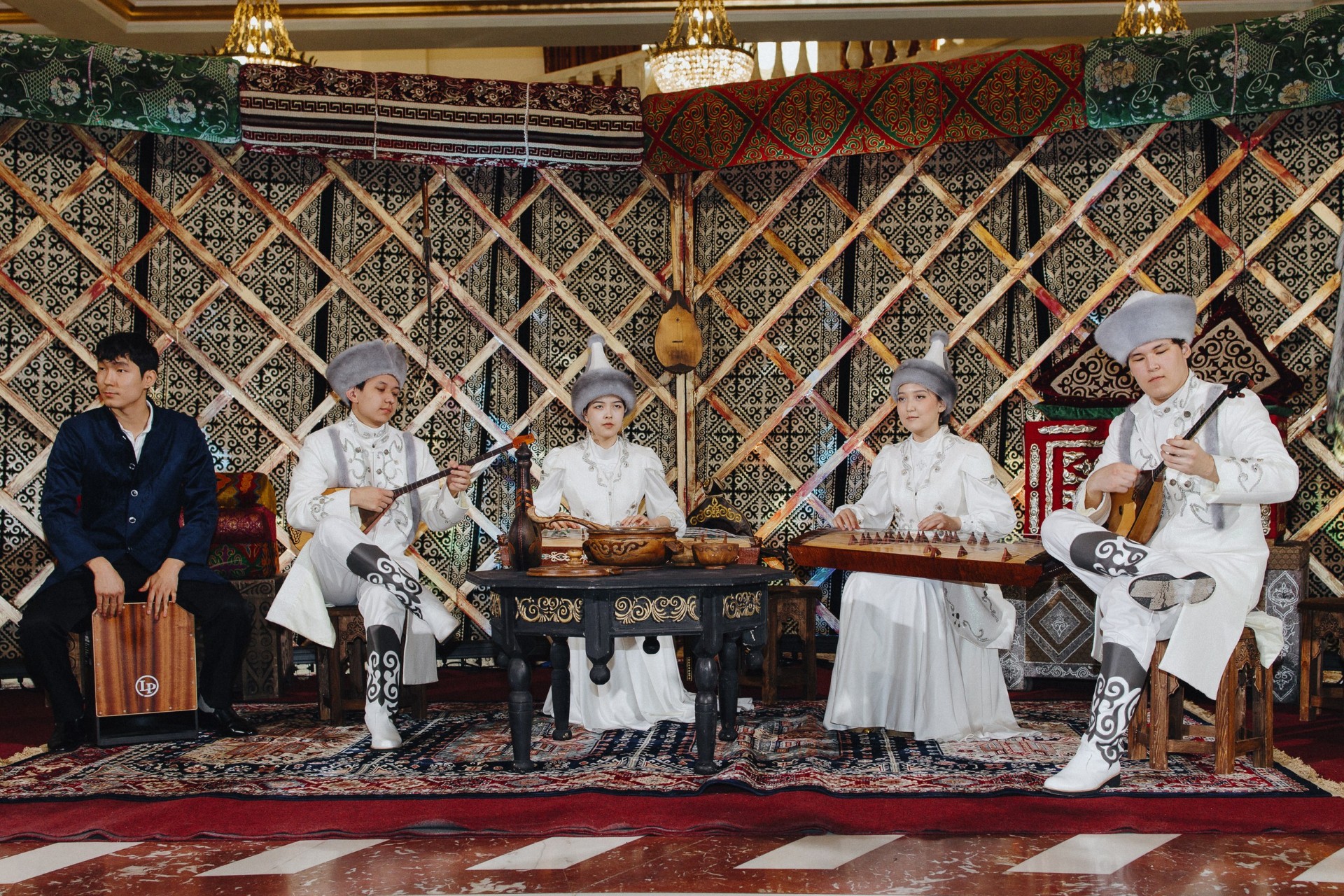

The festive evening of 21 March at Astana Opera commenced with an unexpected surprise. Guests attending Sydyq Mukhamedzhanov’s opera Aisulu discovered that the evening’s primary adventure awaited them not in the auditorium, but immediately upon entry in the main foyer.
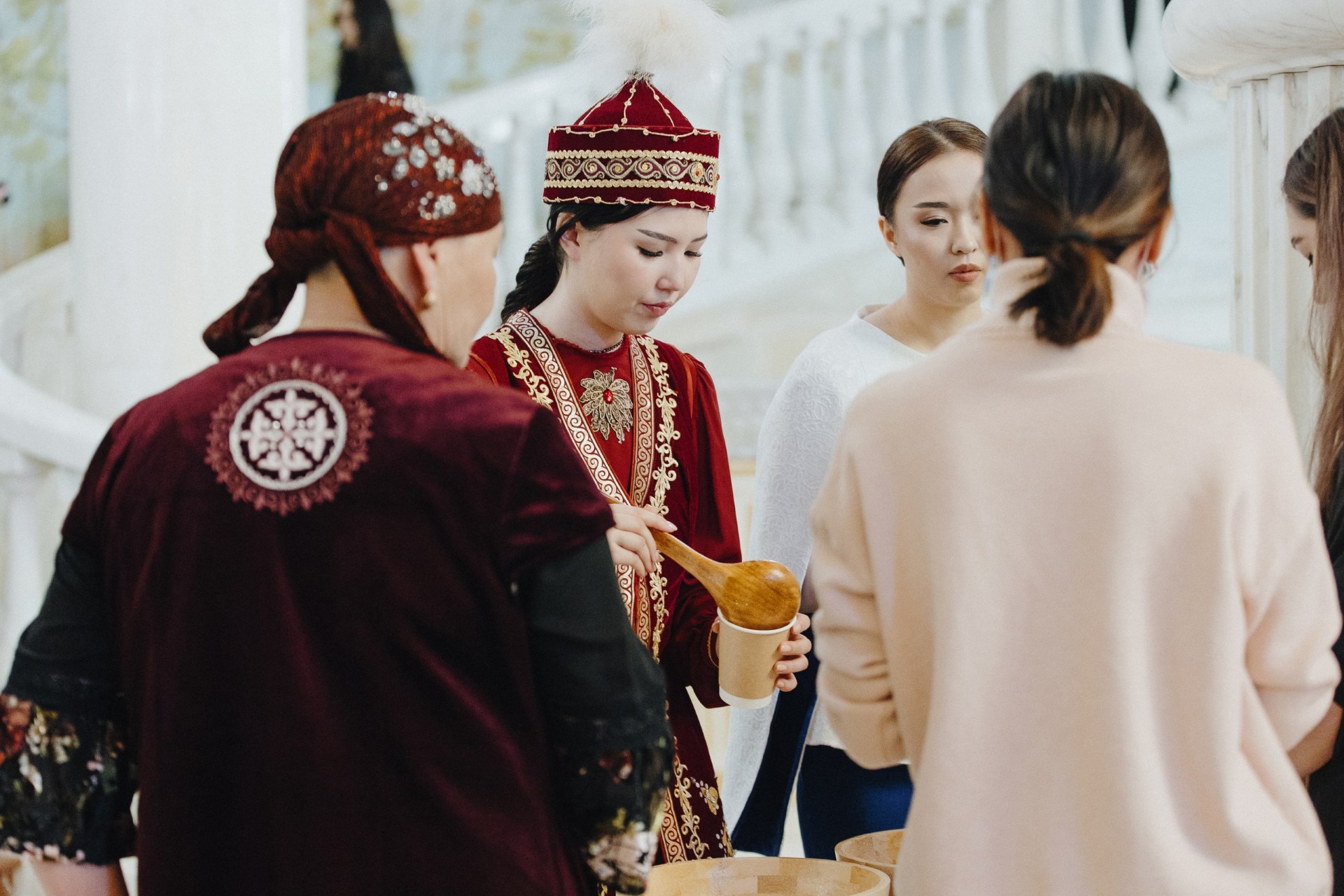
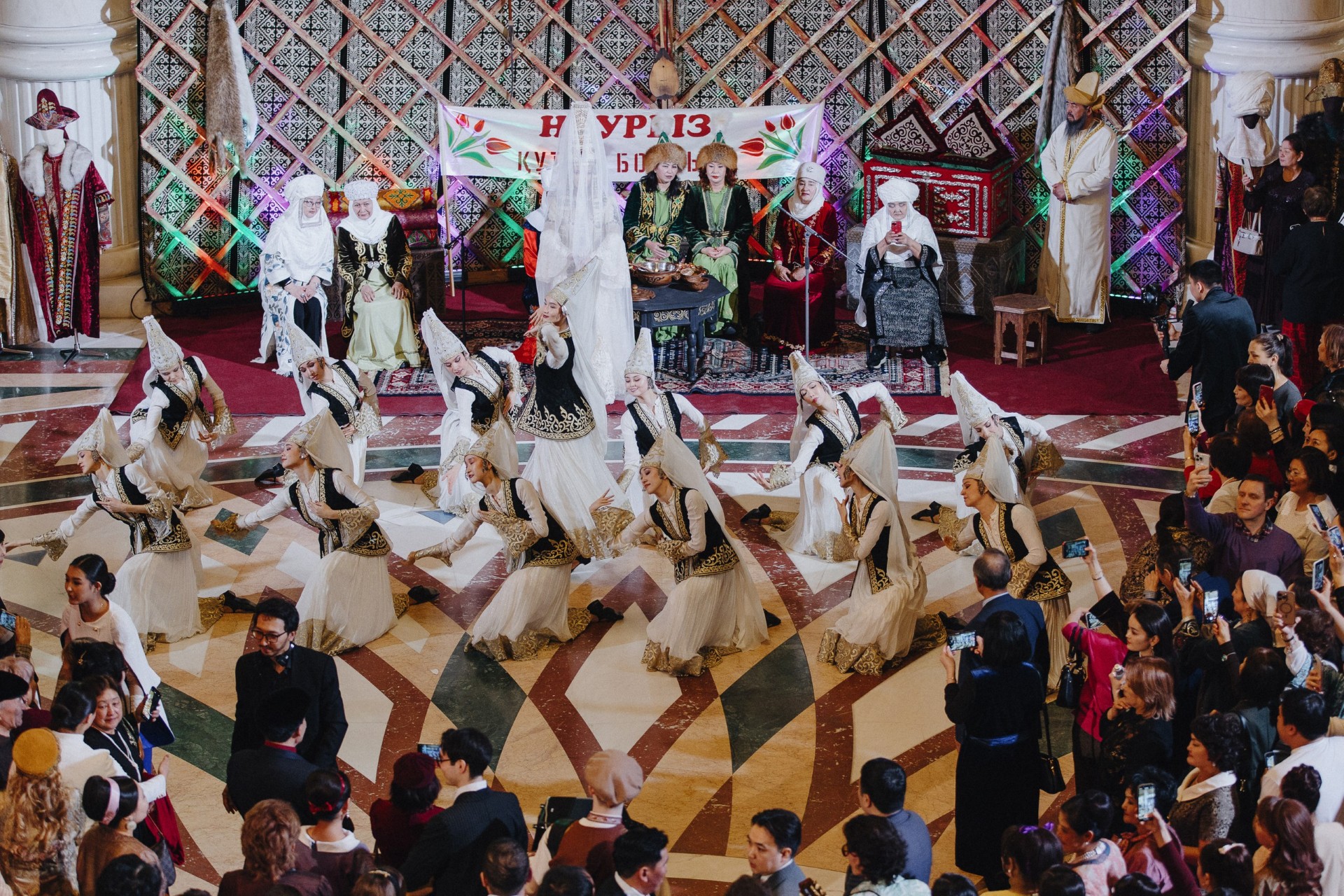
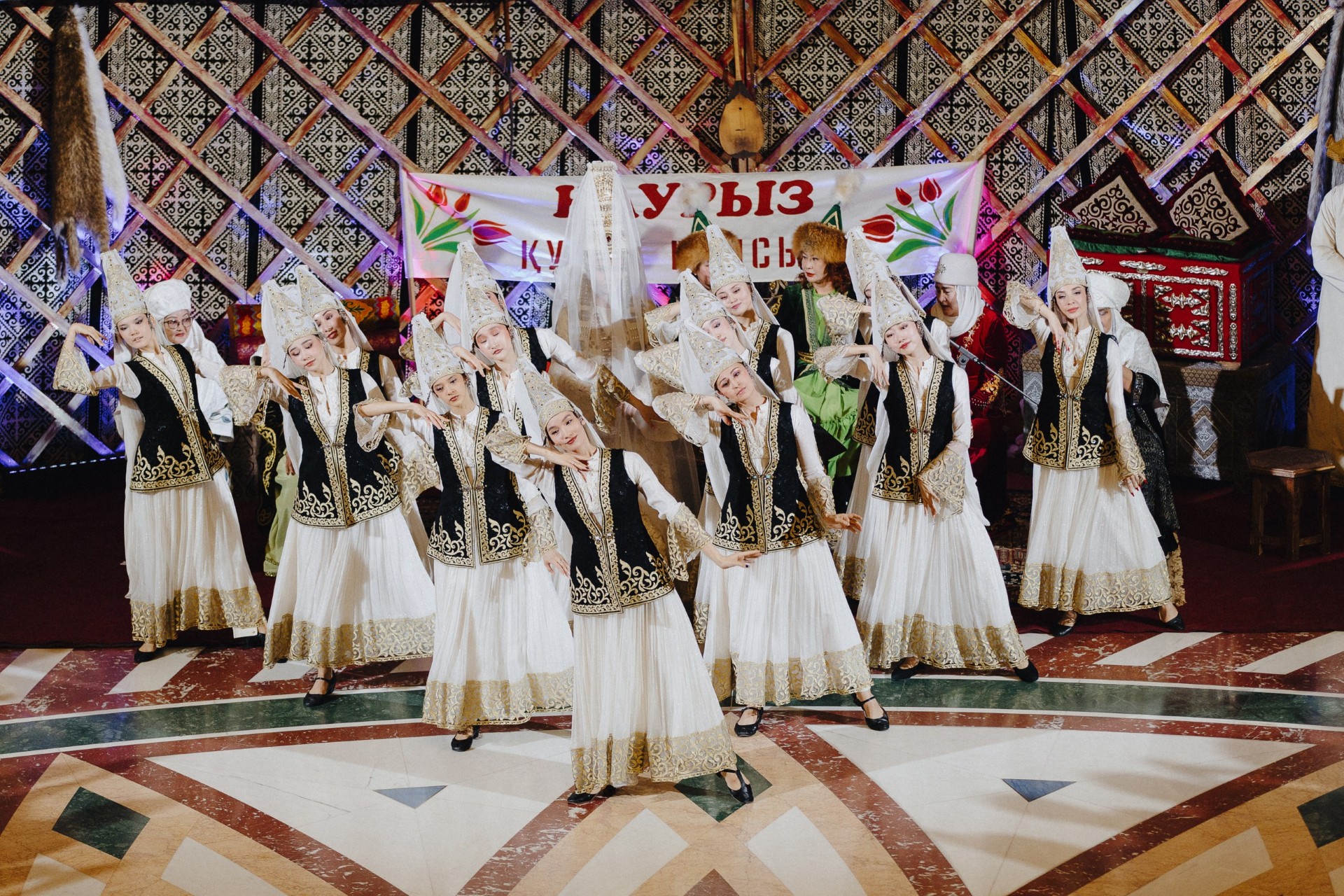
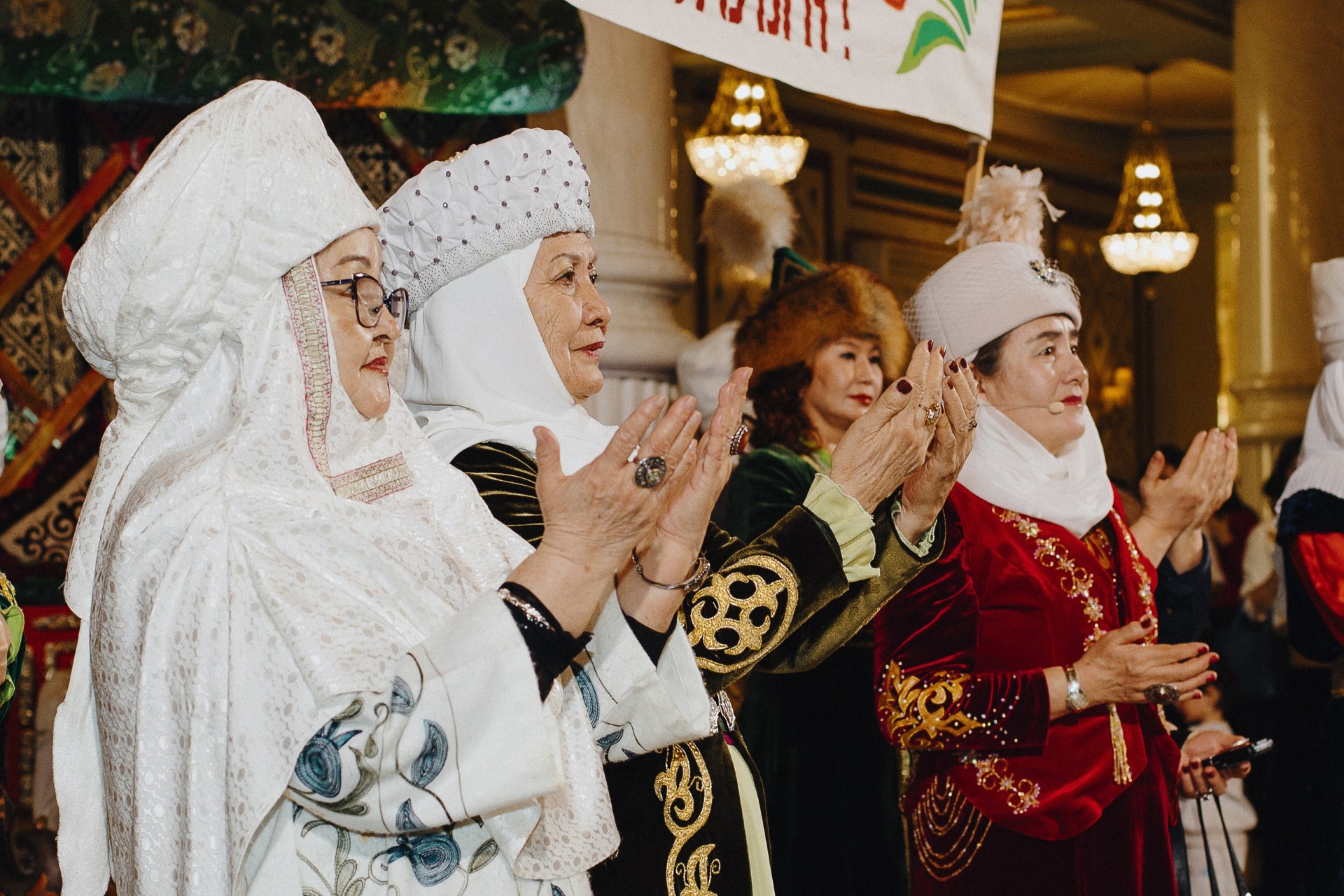
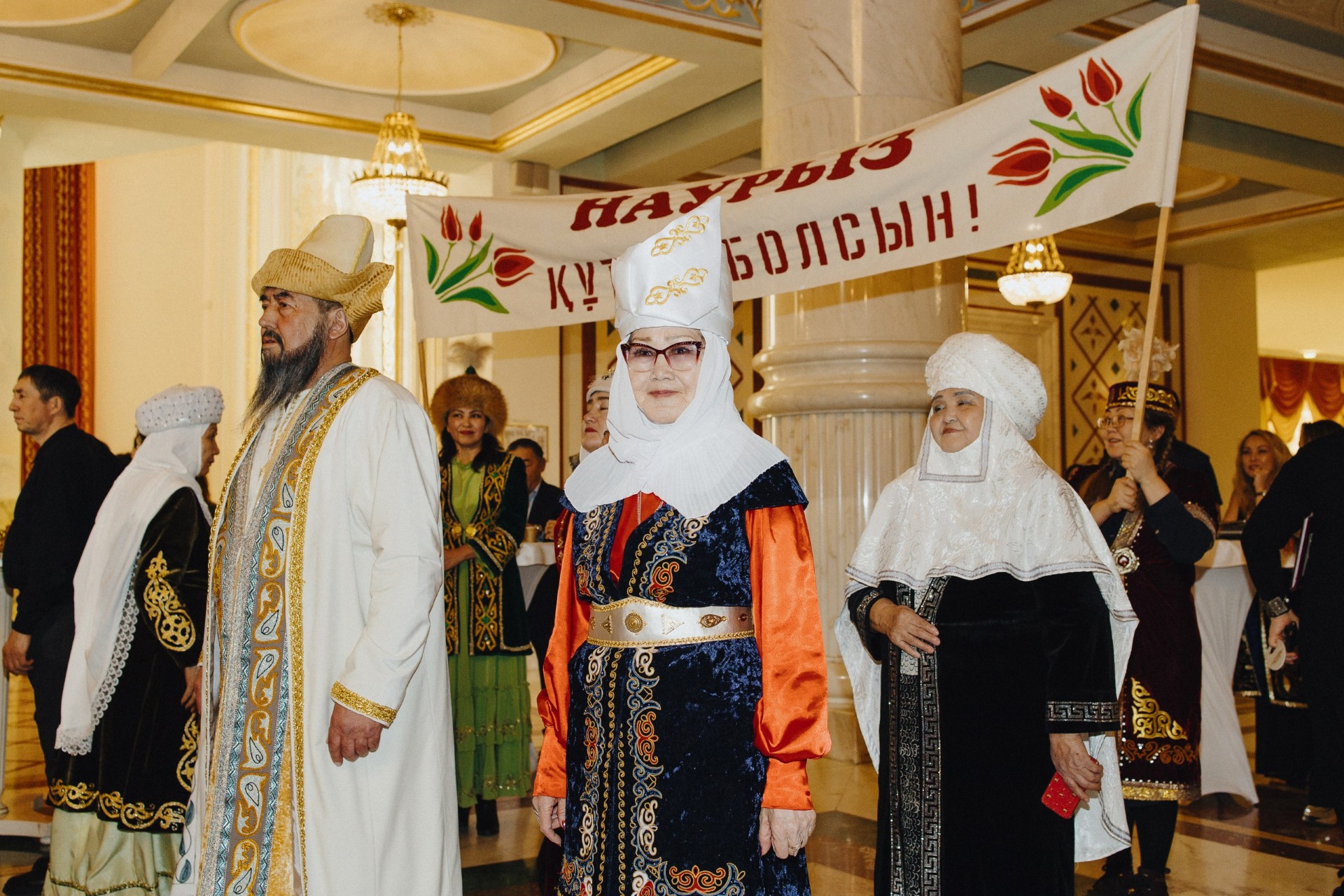
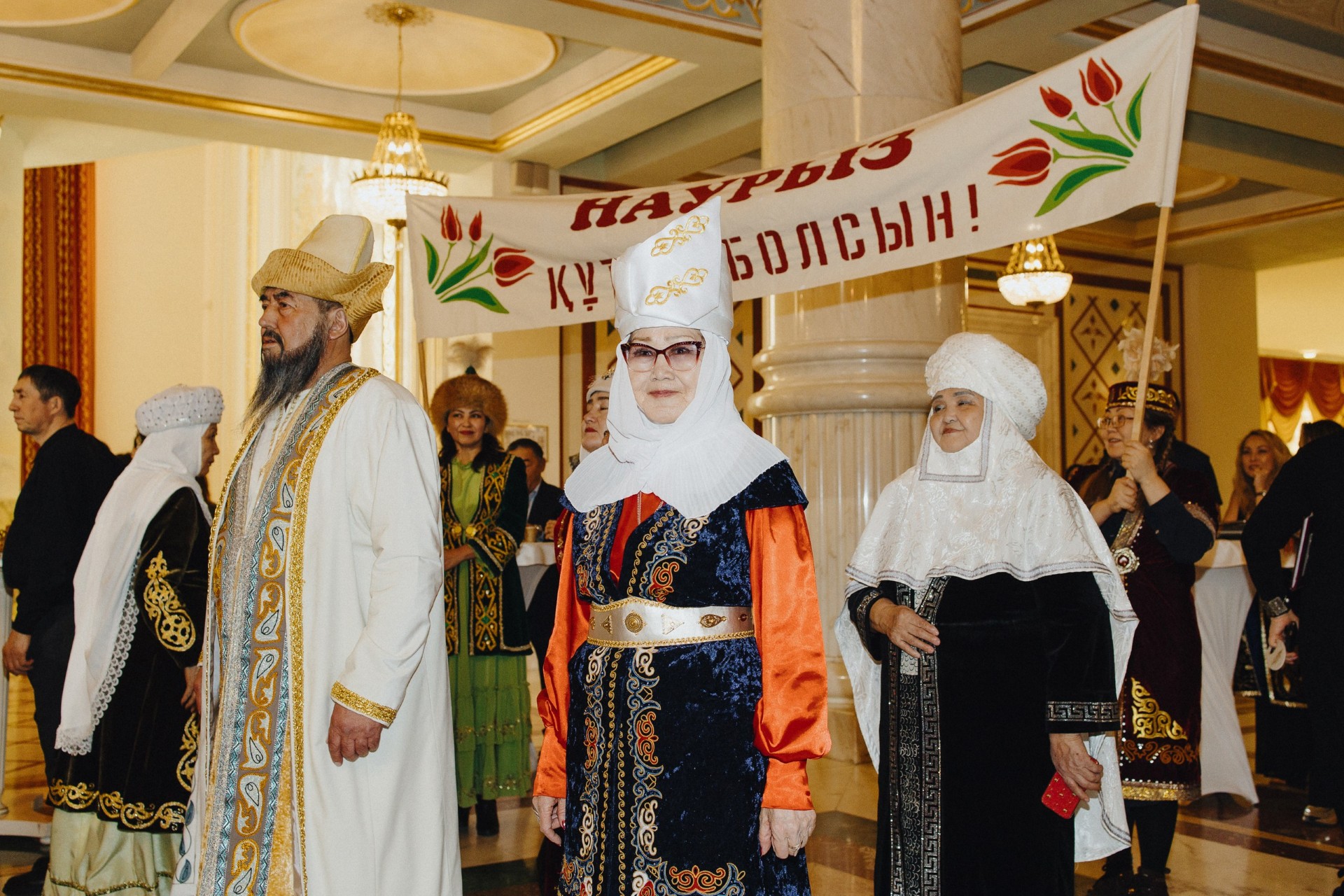
Upon crossing the threshold of the opera house, guests were instantly transported into the heart of two distinct eras. They were first welcomed by opera soloists, the chorus, and the supernumeraries, all resplendent in national dress, as well as Qydyr Ata. The evocative sounds of the zhetygen, dombyra, qobyz, and dauylpaz filled the air as the traditional Betashar ceremony unfolded before them. A delegation of grandmothers in traditional kimesheks from the Almaty District Veterans’ Council, led by Raushan Iskakova, performed the ritual unveiling of the bride’s face, bestowing blessings through the scattering of shashu. Amidst the aroma of freshly prepared bauyrsaqs and other national delicacies, the surrounding reality suddenly underwent yet another shift.
The opera house foyer suddenly transformed into a bustling railway platform of the 1960s–1970s. A loudspeaker announced the departure of the Tselinograd–Almaty train. The audience, captivated by this retro reimagining, filed into the auditorium with smiles, now fully understanding that Aisulu’s love story – which begins at a railway station – had found its perfect backdrop even before the curtain rose.
Aisulu, the first Kazakh comic opera, which is based on a contemporary plot, transports the audience into the atmosphere of the 1960s–1970s. The opera house promises to repeat this temporal experiment: on 22 March, the audience will once again be treated to a surprise in the foyer prior to the performance of Aisulu.