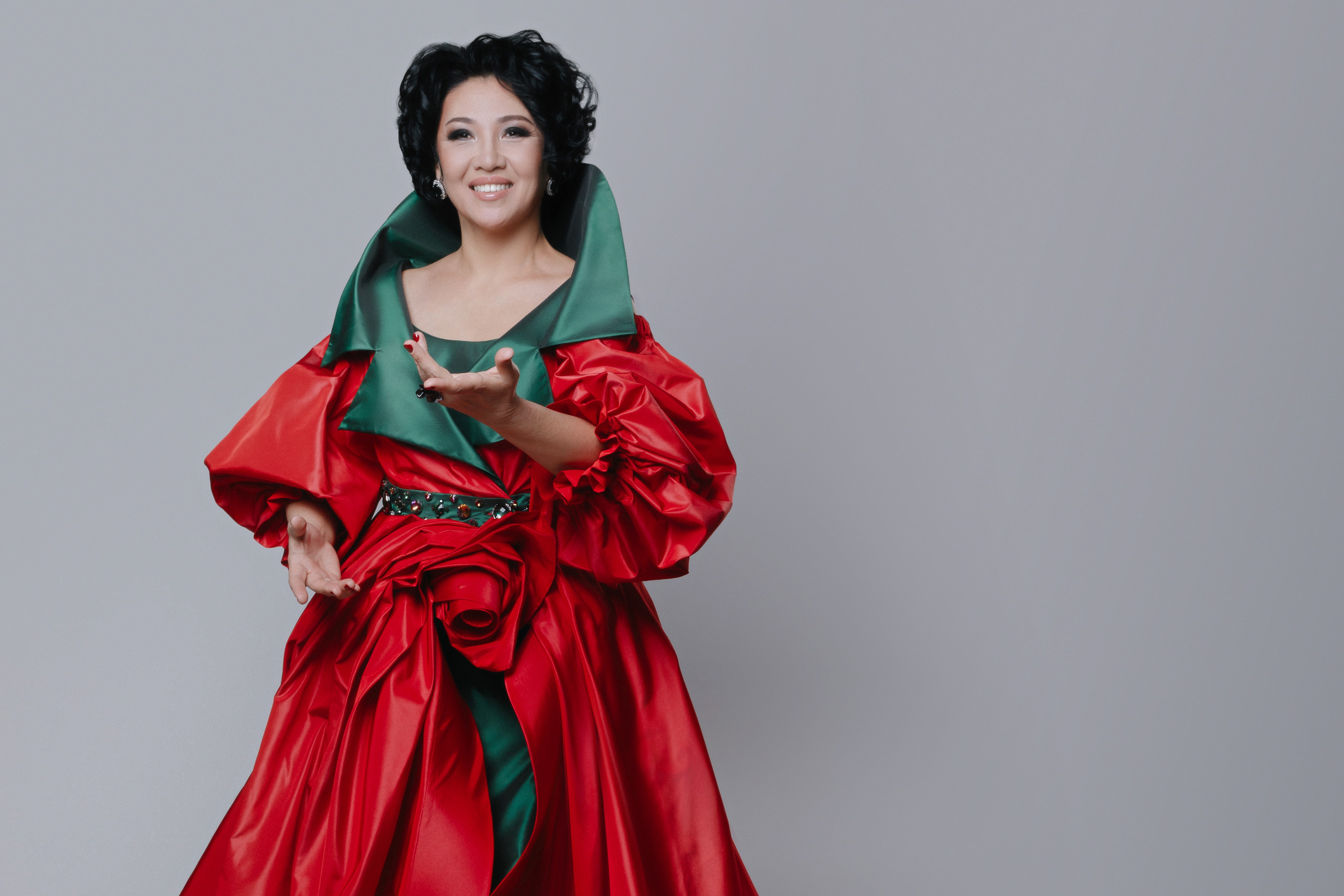

On 28 October, Astana Opera will present a distinct musical programme, ‘Jazz Lounge at the Opera’, in the Kulyash Baiseitova Chamber Hall. The evening will feature world classics and national melodies reinterpreted through the lens of free jazz improvisation.
Astana Opera soloist, Honoured Artist of Kazakhstan Zhannat Baktay, is the driving force behind the concert. Marking her benefit performance, the soprano has invited friends and colleagues to join her for this artistic celebration. Sharing the stage with her are mezzo-soprano Gulzhanat Sapakova and tenor Ramzat Balakishiyev. The vocalists will be joined by principal bassoon Asset Neldybayev and guest pianist Sofiya Mamyrbayeva, with piano accompaniment by Ibragim Ibragimov. The evening will be hosted by Mansiya Yestekova.
The bold combination of rigorous academic tradition and jazz represents a deliberate creative choice by the performers. As Zhannat Baktay notes, these genres have always been closely aligned for her, unified by their shared emotional depth and freedom of expression.
“At the heart of both, the human experience is central – the emotions and stories told through music. Opera provided my foundation: the vocal training, technique, and the ability to navigate dramaturgy and convey intense emotion. Jazz, however, allowed me to experience a different kind of freedom from within the music. For a long time, I have wanted to step beyond the familiar boundaries of classical vocal performance and explore how my voice would sound in an alternative musical space. This is how the concept of the concert gradually emerged – not to contrast opera and jazz, but to demonstrate how they can coexist,” the soprano reflects on the programme’s concept. “In great music, genre becomes secondary. What matters most is what the performer wishes to communicate to the listener. Furthermore, in both traditions, phrasing, breathing, timbre, and the use of pauses are of paramount importance. Sometimes, a single intonation can convey more than an entire page of music. While the modes of expression differ, the underlying emotional language is remarkably close. For me, this project is an opportunity to discover the exact intersection where classical vocal culture meets the freedom of jazz,” the soloist shares.
The program’s creator noted that the musical material for the project was crafted specifically with the concert’s concept and this particular ensemble of performers in mind.
“We wanted to create a true musical dialogue, not just a vocal accompaniment. The bassoon felt like a very intriguing choice. We are usually accustomed to hearing it within a symphony or chamber orchestra, but when paired with the piano, it reveals itself in a completely different way. It has a wonderfully expressive, warm, and slightly velvety timbre that can be deeply intimate and highly dramatic at the same time. I feel this combination beautifully reflects the core idea of the concert: taking familiar classical instruments and pieces and presenting them in a new, more intimate, contemporary sound,” said Zhannat Baktay.
That evening, famous arias and duets from operas by Verdi, Donizetti, Puccini, and other classical composers will take on a smooth, jazz-lounge style. Striking a fine balance was essential to preserve the depth of the original works while seamlessly infusing them with a jazz-lounge aesthetic.
“You can’t just take an aria and throw in jazz chords. If you do that, the very nature of the piece can be lost. Our main goal was to preserve the recognizable melody, the drama, and the emotional core of the original. Only then did we build a new musical atmosphere on top of it. We altered the harmony, rhythm, and texture of the accompaniment, introducing phrasing characteristic of jazz-lounge. It was deeply important to me that the listener could recognize their favourite aria while hearing it from a completely different perspective. It becomes a kind of dialogue with a composer who wrote this music long ago, but we allow ourselves to view it through the eyes of a contemporary performer,” the singer explained.
The rich program also featured Neapolitan and Tatar songs. However, the true highlight of the concert will be the original jazz interpretations of Kazakh national works. These familiar melodies will take on a fresh sound, weaving together the temerament of Naples, the depth of Kazakh music, and the freedom of jazz.
The vocalist emphasized that it was essential for the program to be not just an operatic experiment, but a true musical journey. “Kazakh, Tatar, and Neapolitan music are vastly different in their origins, yet each of these traditions possesses an incredibly expressive melodic quality and a distinct emotional intensity. That is precisely what made this material so fascinating to interpret through jazz. When you shift the harmony, rhythm, and musical texture, a familiar folk melody can reveal itself in completely unexpected ways and in entirely new colours. I was particularly struck by the new sound of the Kazakh folk song ‘Zhaidarman’. Knowing this piece so well in its traditional form made it especially thrilling to hear the familiar melody become more intimate, contemporary, and even somewhat cinematic, all while retaining its national essence,” Zhannat Baktay concluded.
The concert will begin at 7 pm.