

When we speak about national ideology, historical memory and statehood, it is important to understand that these are not merely questions of history textbooks, monuments or government programs.
Ultimately, they are much deeper questions:
Who are we? Where did we come from? What did our ancestors preserve for us? What does it mean to be a citizen of Kazakhstan today? And what legacy will we leave to future generations?
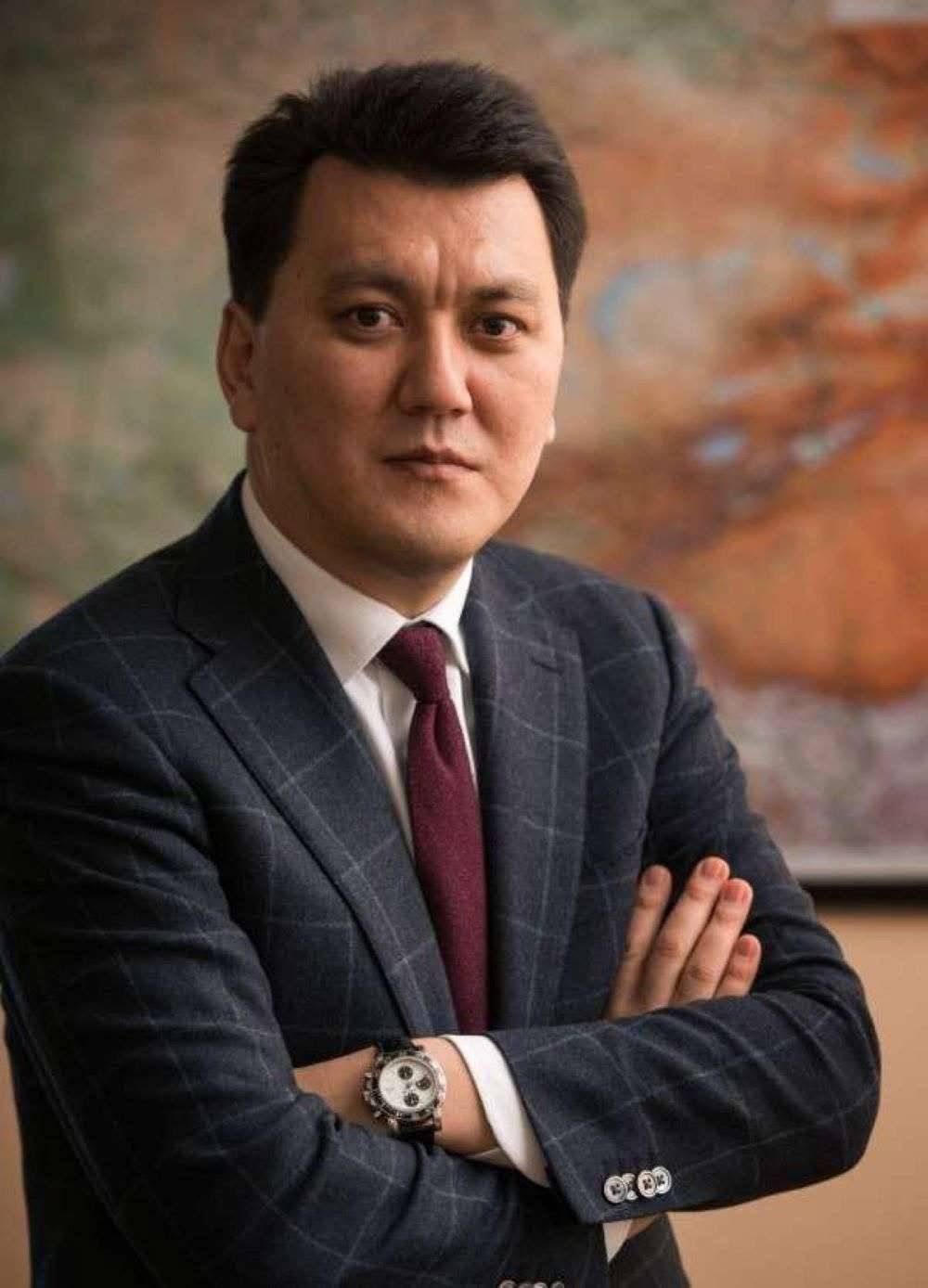
One of the statesmen who has consistently worked with these issues is Erlan Tyny mbayuly Karin — a political scientist, historian, Candidate of Political Sciences, statesman and researcher of political and social processes.
What makes his professional path particularly interesting is that it began with history. After receiving a historical education, Erlan Karin continued his academic work in philosophy and political science. For many years, his activities have been closely connected with issues of social development, national identity, historical memory, ideology and state-building.
But perhaps the most interesting aspect of his work is not the positions he has held.
It is his work with ideas and meaning.
History as the Foundation of Statehood
For Erlan Karin, history is not simply the past.
It is the foundation upon which a modern state understands itself.
The history of Kazakhstan did not begin with independence in 1991. The roots of Kazakh statehood go much deeper — into the history of the Great Steppe, Turkic civilization, the Golden Horde, the Kazakh Khanate and other historical state formations that left their mark on the history of Eurasia.
And here an important principle emerges:
Modern Kazakhstan must not simply remember its history — it must understand its continuity.
Memory of the statehood of our ancestors.
Memory of the land.
Memory of language and culture.
Memory of outstanding people who created and preserved the country.
And, most importantly, an understanding that independence is the greatest historical value, which must be protected and passed on to future generations.
A New Ideology Does Not Mean Rejecting the Past
The concept of a “new ideology” may sometimes be perceived as an attempt to abandon previous values.
But Kazakhstan’s modern approach suggests quite the opposite.
The task is to connect historical heritage with the modern state.
To preserve what has stood the test of time while simultaneously shaping the values required by society in the twenty-first century.
This is not about living in the past.
It is about using the past to understand the present more deeply and to build the future more responsibly.
That is why culture, history, language, art and national heritage acquire particular importance.
From National Memory to Civic Identity
It is especially important that Kazakhstan’s modern identity is not formed solely around ethnic origin.
It must unite all citizens of the country.
That is why, alongside the history of the Kazakh people, the following concepts are increasingly emphasized today:
Independence.
Unity.
Patriotism.
Justice.
Responsibility.
Law and order.
Diligence.
Professionalism.
Creation.
Innovation.
This is how a modern system of national values is formed.
And this changes the very understanding of patriotism.
Patriotism is not merely words about love for one’s Motherland.
It is respect for the state, its history and symbols, its culture and language — and at the same time, the personal responsibility of every individual for the present and future of Kazakhstan.
Statehood as Historical Continuity
One of the important directions of contemporary public discourse is a return to the very concept of statehood.
Kazakhstan seeks to perceive itself not simply as a state that emerged at a particular historical moment, but as a modern form of the statehood of a people with deep historical and civilizational roots.
That is why increasing attention is being paid today to understanding historical continuity.
This is a very important idea.
Because history ceases to be merely a story about the past.
It becomes part of the modern understanding of the state.
When a person understands that today’s Kazakhstan stands upon a centuries-old historical journey, the concepts of homeland, independence, culture and responsibility are perceived in an entirely different way.
Why Is This Particularly Important Today?
Because the twenty-first century is not only a time of competition for territories, economic resources and technologies.
It is also a time of competition for identity and historical memory.
A struggle for the right to answer independently the questions:
Who are we?
Which history do we consider our own?
Which names should our children know?
Which works must be preserved?
Which traditions should continue?
Which values should unite our society?
That is why culture, history, language, art, cinema, literature, architecture and national memory are not secondary areas.
They are part of the spiritual foundation of the state.
And this is where the work of people capable of connecting historical knowledge with modern state thinking becomes particularly important.
From the Past to the Future
Preserving heritage does not mean turning the country into a museum.
On the contrary.
Historical memory should become a source of development.
If we know where we came from, we can better understand where we can go.
If we know the price of independence, we learn to value it more deeply.
If we know the history of our culture, we can present it to the world not as an exotic phenomenon, but as part of the great global civilization.
And if the younger generation understands that it is a continuation of a centuries-old history, it develops a different sense of responsibility toward the future.
This is where cultural institutions, creative organizations and public initiatives play a special role in preserving and promoting national heritage.
Because heritage lives only when it is known, loved and passed on.
Erlan Karin and the Importance of Working with Meaning
Erlan Karin is interesting not only as a statesman.
His professional path demonstrates how closely history, culture, politics, national identity and state-building are interconnected today.
That is why a discussion of his work is simultaneously a discussion about how Kazakhstan wants to see itself in the twenty-first century.
A country that respects its historical roots but does not live in the past.
A country that preserves its culture while remaining open to the world.
A country where national identity does not divide people but becomes a foundation for self-confidence.
A state that understands that a strong future is impossible without respect for its own past.
And perhaps this is the main meaning of Kazakhstan’s contemporary rethinking of national values:
without forgetting our ancestors, to learn to take responsibility for our descendants.
A Message from the Cultural Legacy Fund
On behalf of the Cultural Legacy Fund, we sincerely wish Erlan Tyny mbayuly Karin great success in his new and exceptionally important state position as Vice-President of the Republic of Kazakhstan.
We are convinced that his profound knowledge of history, understanding of the processes shaping national identity, and respect for Kazakhstan’s cultural and historical heritage will become an important foundation for his continued work for the benefit of our country.
May this new stage of public service be filled with wise decisions, constructive work, responsibility and great achievements in strengthening the statehood of Kazakhstan, preserving historical memory and passing the rich heritage of the Kazakh people on to future generations.
We wish you strength, wisdom, inspiration and success in this high and responsible mission!
With deepest respect,
Cultural Legacy Fund
