On 10 September, the third concert in the signature series ‘Concert-Story with Alan Buribayev’ will take place at Astana Opera’s Kulyash Baiseitova Chamber Hall.
The two previous concerts – focusing on Ludwig van Beethoven’s Symphony No. 7 and Robert Schumann’s Symphony No. 3, ‘Rhenish’ – were met with enthusiastic response from the public. Audiences described it as a transformative concert experience, noting that the time flew by and left them eager for more.
This evening’s programme brings together four great composers: Antonín Dvořák’s virtuoso Carnival Overture, composed shortly before his departure for America, alongside Edvard Grieg’s deeply moving ‘En Svane’. The repertoire also features Richard Strauss’s orchestral songs ‘Morgen!’ and ‘Im Abendrot’, written more than half a century apart, and Jean Sibelius’s Symphony No. 2, one of the defining early symphonies of the 20th century. What unites these diverse works, and why they have been brought together, is among the questions explored in this evening’s programme.
At the heart of each concert in the series is a major symphonic work. On this occasion, it will be Sibelius’s Symphony No. 2, a masterpiece rarely performed on the Kazakh stage, which will be presented at Astana Opera for the first time. For the Maestro, this is a deeply significant piece – one of his favourite symphonies, which he has conducted in various countries. Among his most memorable performances of the work are a tour with Sweden’s Norrköping Symphony Orchestra for the Czech Philharmonic’s subscription series in Prague, and in the UK with the Royal Philharmonic Orchestra.
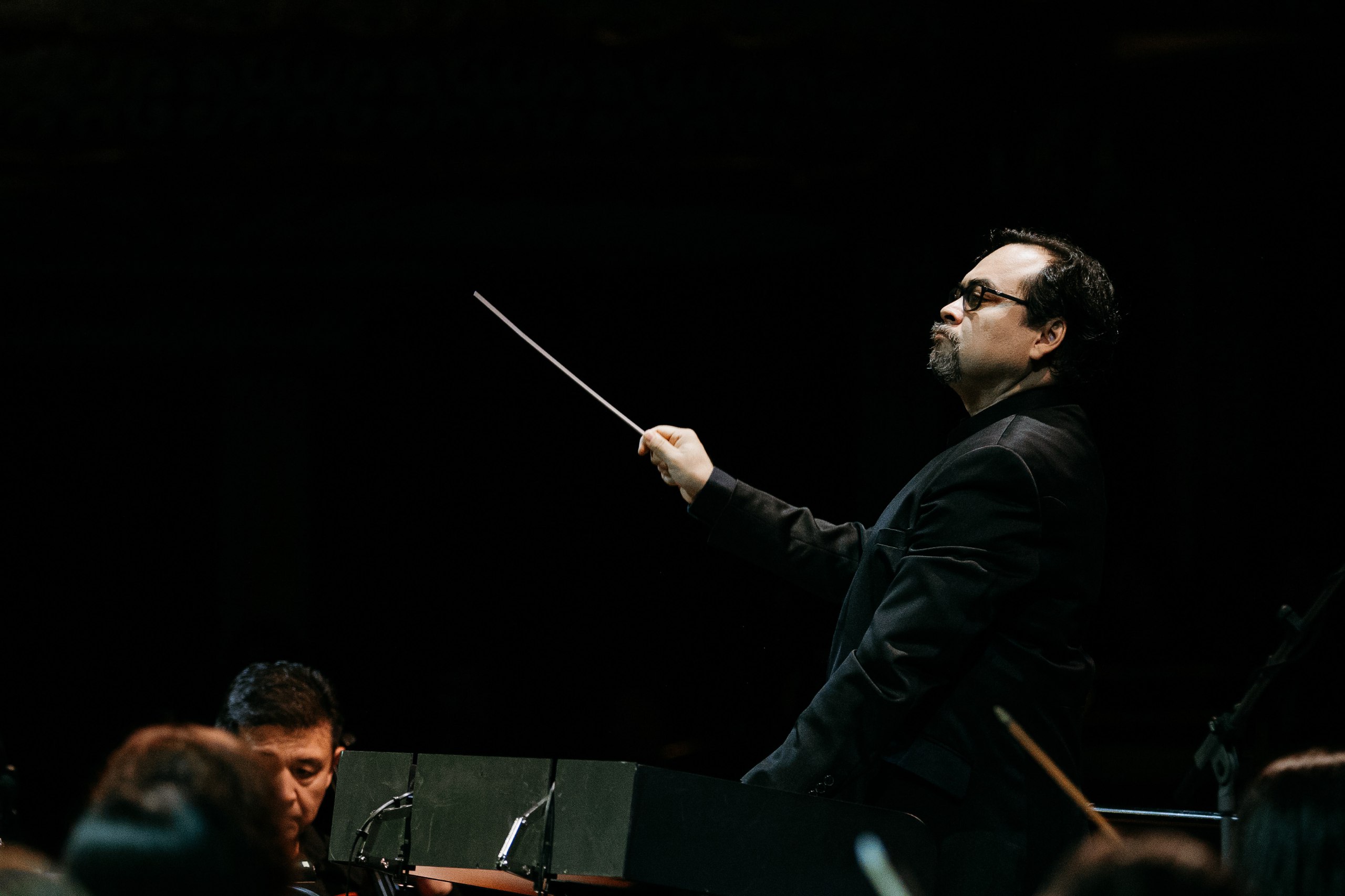
In ‘Concert-Story with Alan Buribayev’, the conductor has created his own distinctive format for communicating with the public. During the concert, he addresses the auditorium, focuses on individual fragments of the score, demonstrates them with the orchestra, and sometimes unexpectedly turns to completely different works to reveal a connection, highlight an association, or recall an intonation that suddenly transforms the listener’s perspective. It is here that the Maestro’s own temperament is particularly felt. His profound knowledge of the material, extensive performing experience, and rare gift for storytelling allow him to effortlessly guide the audience, discussing complex subjects with vivid precision without turning the concert into an academic lecture, as the conversation extends beyond the notes alone. He easily transitions to other themes: art, literature, history, and philosophy. This approach fosters a special, intimate atmosphere in the hall, creating a rare sense of live communication where performers and audience experience the evening together.
The singers provide a distinctive highlight to the evening. Their vocal numbers, linked either associatively or directly to the programme’s main masterpiece, form an integral part of the evening’s overarching concept.
The concert features soprano Madina Islamova, tenor Artur Gabdiyev, and the Astana Opera Symphony Orchestra. At the podium is the Honoured Worker of Kazakhstan and State Prize laureate, the opera house’s principal conductor, Alan Buribayev.


«Cultural Legacy Fund»
FOUNDATION FOR CULTURE AND CREATIVE INDUSTRIES

Contact information
For more information, to contact us or to apply for participation in the programs, you can use the following contacts:
Public Fund for the Support of Culture and Creative Industry «Cultural Legacy Fund».
Address: Astana, Yesil District, Mangilik El Avenue, Building 55/22, Block C 4.3., Office 246.
E-mail: info@culturallegacyfund.kz, Impresario@culturallegacyfund.kz
Stay connected
Follow our website and social media to stay up to date with new programs, opportunities, and cultural initiatives from the Cultural Legacy Fund.
Developer of LLP "TORUS.KZ"
© 2025 All rights reserved
© 2025 All rights reserved