
Just two strings of a dombyra can convey joy and sorrow, tell stories of our ancestors’ valour, describe the beauty of our native land, and celebrate the strength of the human spirit. It is no coincidence that National Dombyra Day, celebrated annually on the first Sunday of July, is dedicated to this very instrument. This year, the holiday falls on 5 July, and from 4 to 6 July, Astana Opera invites audiences to visit the themed exhibition Dombyra in the Main Role in the opera house foyer.
The exhibition, organised with the support of the Ministry of Culture and Information of Kazakhstan, is open to those attending a performance or taking a guided tour during this period. The display will offer visitors an insight into the vital role the dombyra plays in the creative life of the opera house. Through a video presentation and archival material from the Astana Opera, audiences will discover productions in which the national instrument serves as a key artistic symbol, enhancing the traditional colour of the performances.
For centuries, the dombyra has remained one of the definitive symbols of Kazakh culture. Through the art of the kui, the nation has passed down its history, philosophy of life, and the memory of monumental events and extraordinary figures. The compositions of legendary kuishi preserve the living voice of the Great Steppe, which continues to inspire musicians and audiences today.
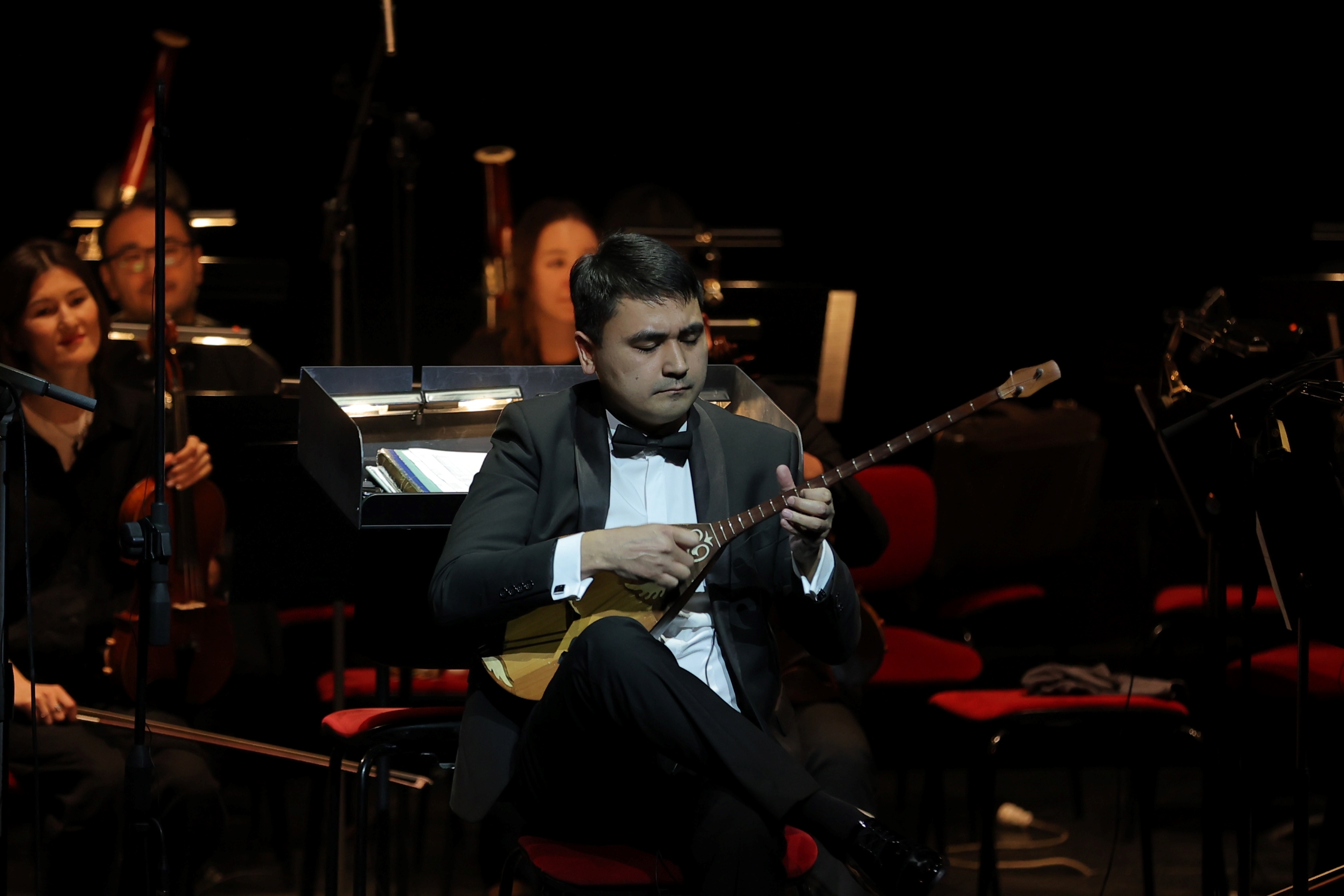
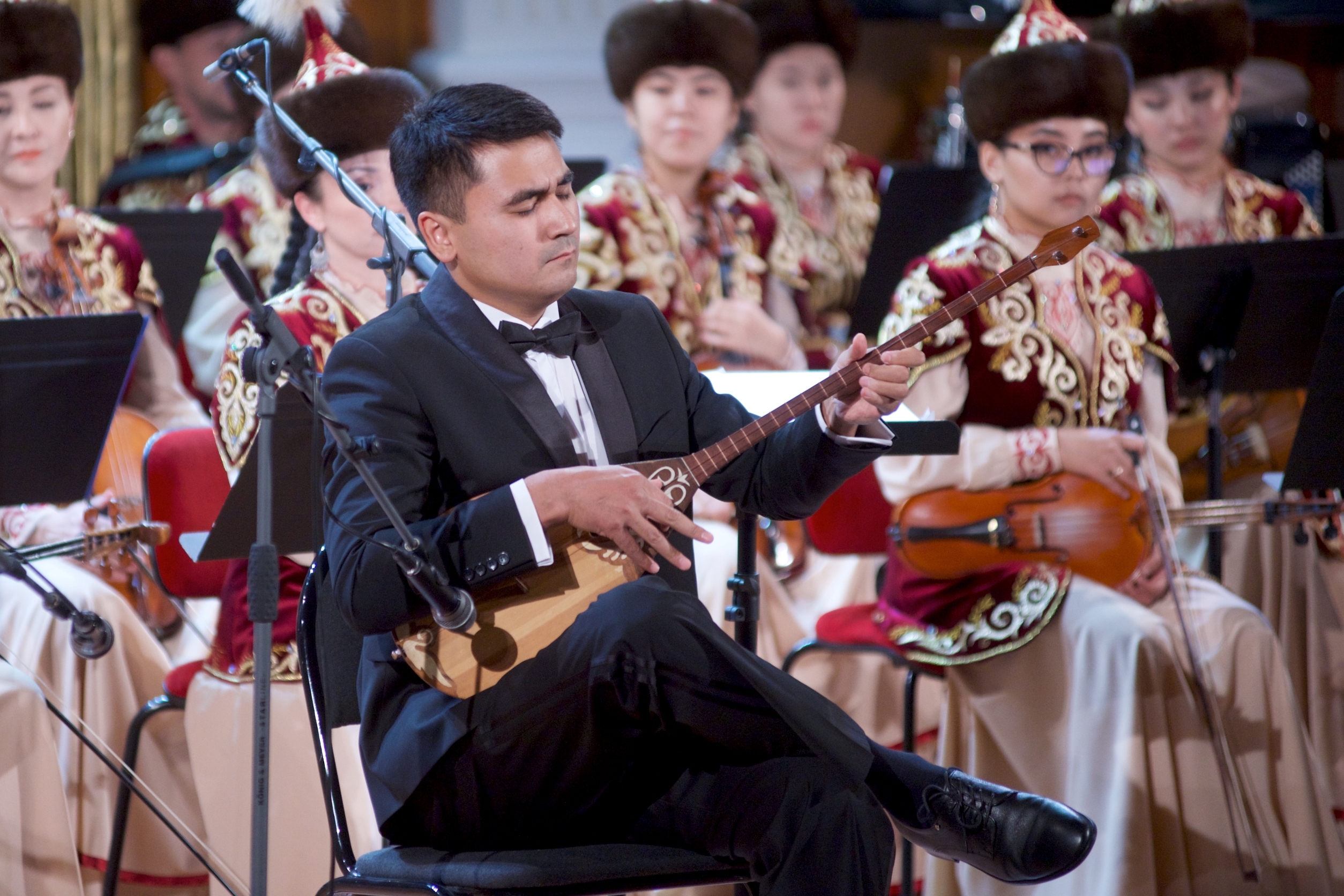
Today, the resonant voice of the dombyra is also heard within the walls of the country’s leading opera house. For many Astana Opera artists, the instrument forms an integral part of their personal history. “In any Kazakh family, the presence of a dombyra is a natural tradition,” explains Ruslan Baimurzin, the opera house’s conductor and recipient of the Order of Qurmet. “Thanks to my father’s mastery of the instrument, we grew up surrounded by its enchanting sounds. Noticing my passion for music and my interest in the dombyra, my father would sit me down in front of him and teach me how to play. I was six years old at the time. He was the first to introduce me to the dombyra, and later, I was fortunate enough to encounter remarkable mentors along my artistic path. When I entered the children’s music school in Kokshetau, my teacher was Serik Sarsenbayev. Later, at the Akhmet Zhubanov Republican Kazakh Boarding School for Gifted Children in Almaty, I studied under Professors Aitzhan Toktagan and Gulperizat Ultarakova. I can confidently say that all my achievements in the art of the dombyra were made possible by these mentors. I frequently perform with the dombyra on our opera house’s stage, and have had numerous opportunities to showcase this artistry abroad during international tours. Indeed, the sounds of the dombyra feature prominently in the Astana Opera’s concerts and productions. This is particularly
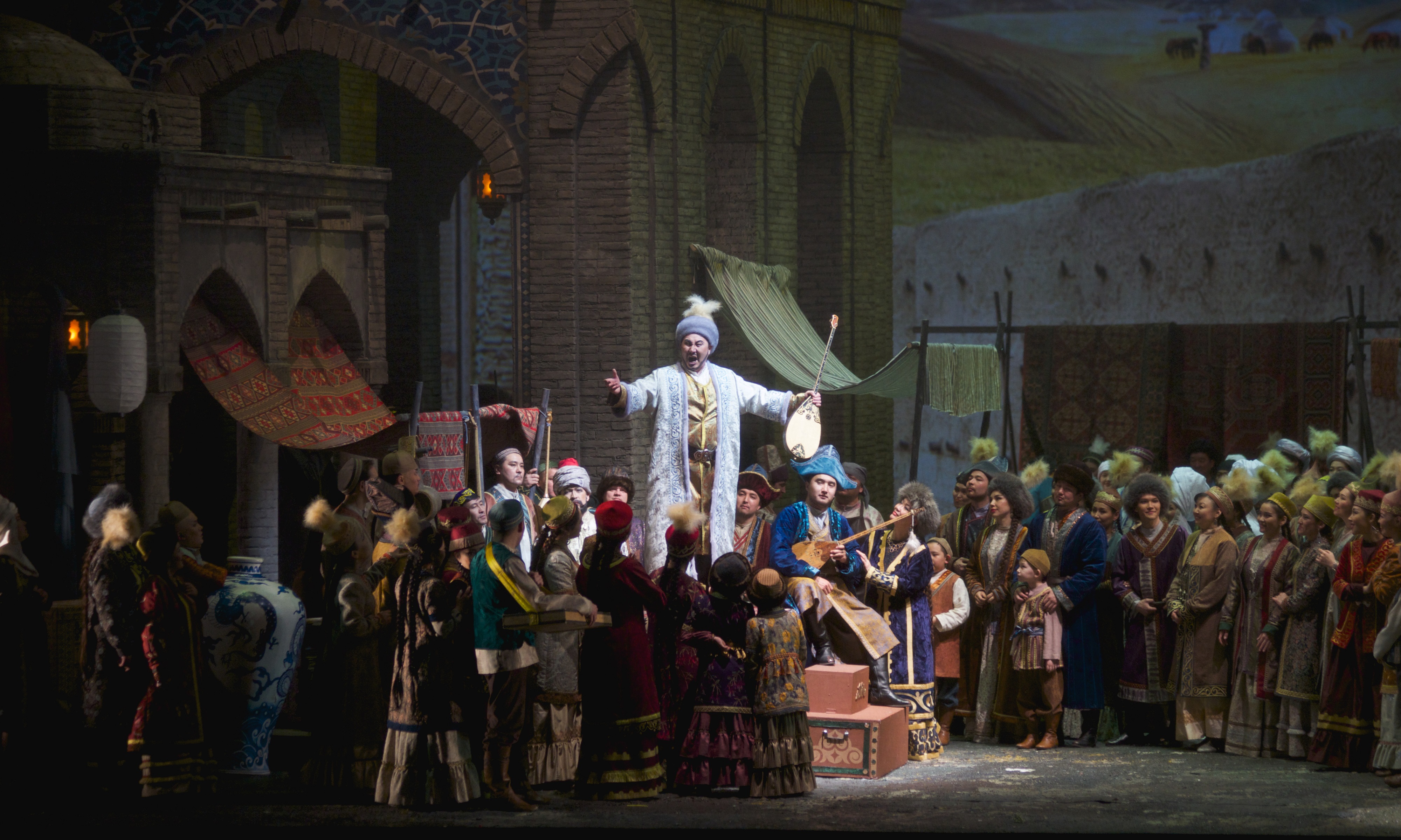
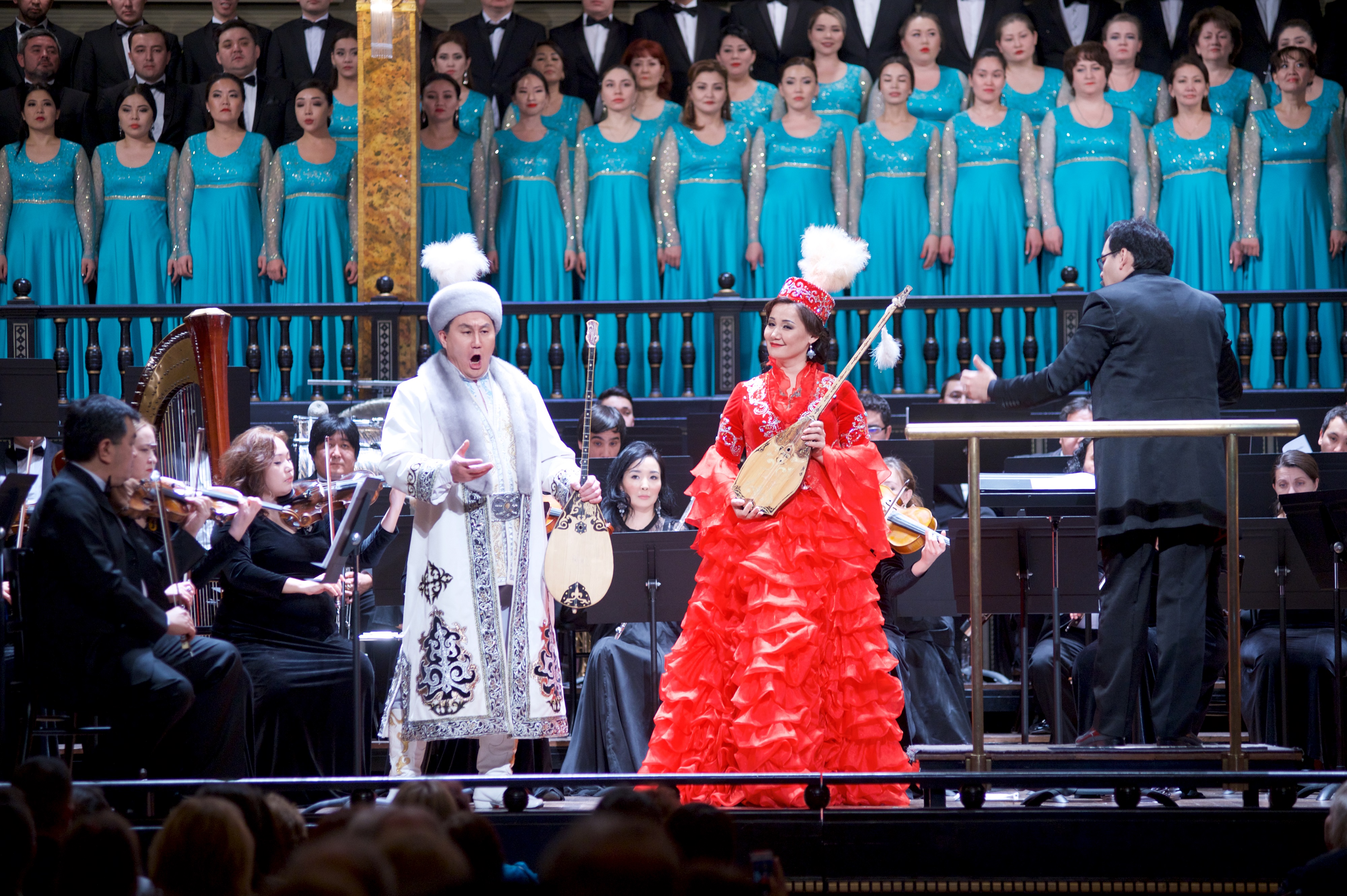
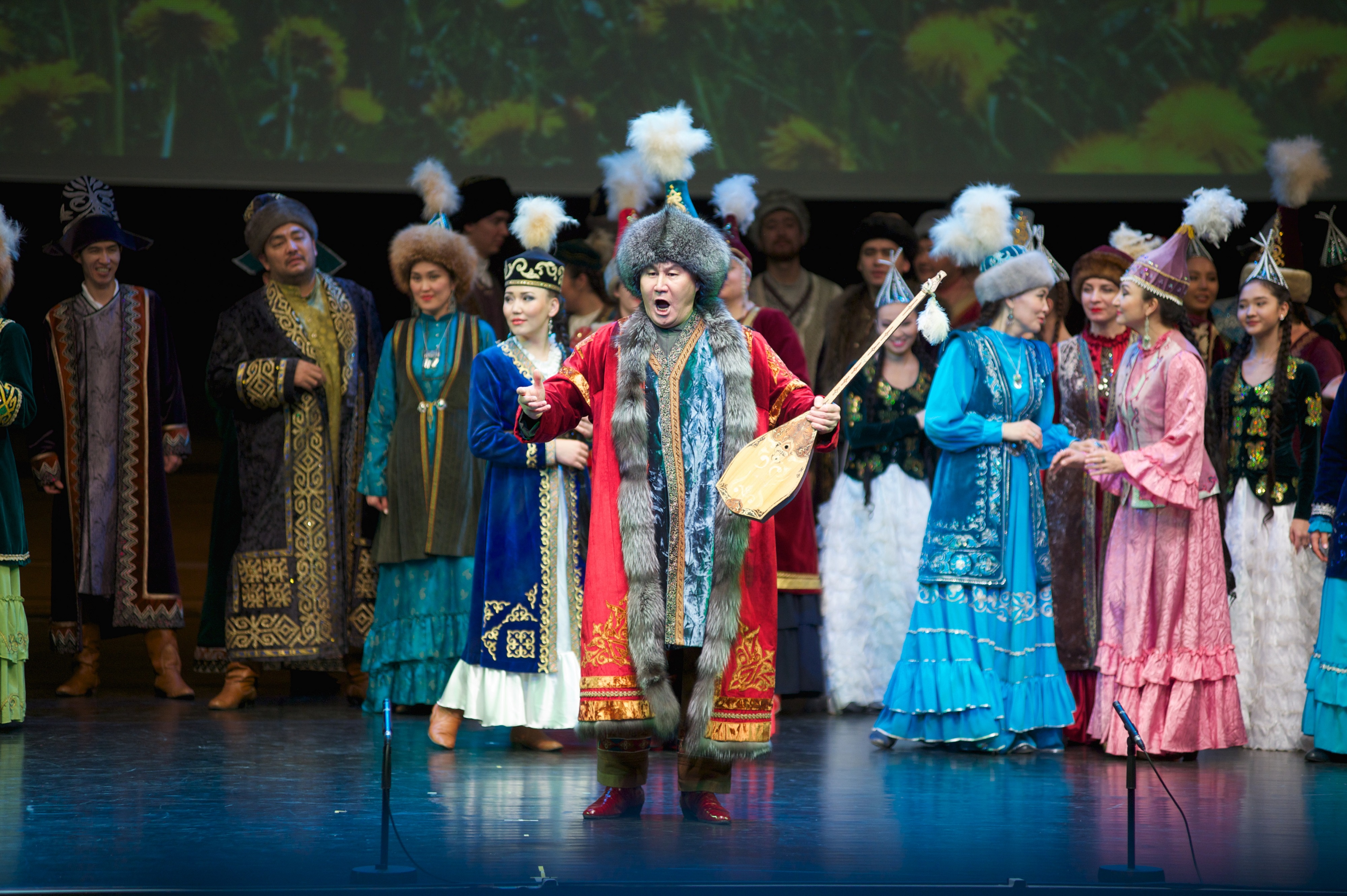
true of the national repertoire staged at the opera house, including Akhmet Zhubanov and Latif Khamidi’s Abai, Yevgeny Brussilovsky’s Qyz Zhibek, Muqan Tolebayev’s Birzhan – Sara, Yerkegali Rakhmadiyev’s Alpamys, Sydyq Mukhamedzhanov’s Aisulu, and Serikzhan and Alibi Abdinurov’s Appaq, the Qypshaq Daughter, where artists regularly perform with the dombyra.”
Beimbet Tanarykov, a soloist with the opera company, also shares a compelling history with the instrument. “My parents had a profound influence on my introduction to the arts,” the singer explains. “Both my mother and father sang, and inspired by them, my nine brothers and I all played the dombyra from childhood. Whenever guests visited, we would always perform for them. From a very young age, I loved listening to the radio, captivated by the songs performed by People’s Artists of the USSR Bibigul Tulegenova, Yermek Serkebayev, and Rishat Abdullin, as well as People’s Artist of Kazakhstan Muslim Abdullin. I believe it was the artistry of this older generation that first awakened my passion for opera. I must highlight that throughout my twenty-year artistic career, the dombyra has remained my constant companion. When performing the roles of Birzhan, Shege, or Azim, I always take to the stage with the instrument in hand. Ultimately, my childhood devotion to singing and the Kazakh dombyra has found its true expression on the opera stage.”
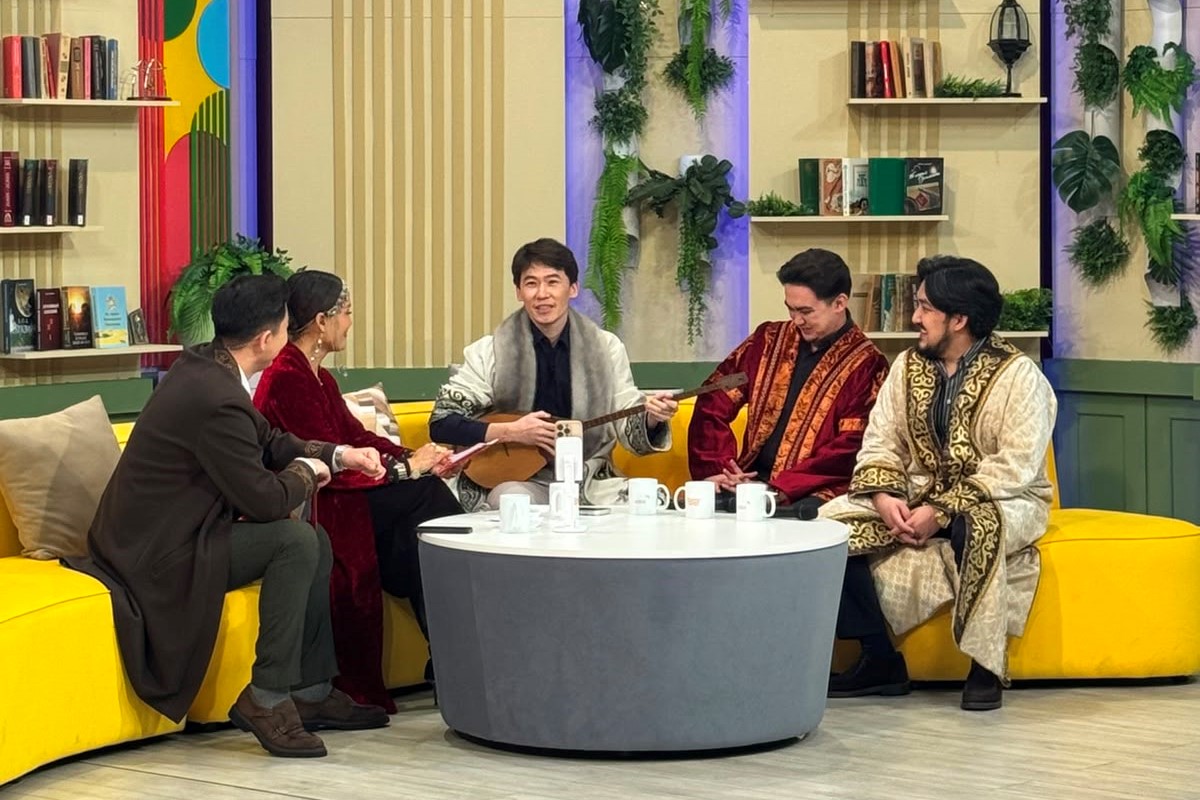
This year, Astana Opera’s principal dancer and Honoured Worker of Kazakhstan, Yerkin Rakhmatullayev, gave a brilliant performance of Seken Turysbekov’s kui “Konіl Tolqyny” on the Khabar TV channel’s morning show Oyan.
“The dombyra is a sacred instrument for the Kazakh people. The person who first awakened my love for the instrument, and for music as a whole, was my grandfather, Rakhmatulla. When he played a kui, it was breathtaking. I was only a child then, but I remember it as vividly as if it were yesterday. As he played, my grandfather would sit me beside him and, following ancient custom, have me gently bite the tuning peg of the dombyra, ritualistically passing the musical gift on to me. My late grandfather used to say: ‘You will follow in my footsteps and become a kuishi.’ Although fate ultimately drew me into the world of ballet, leaving me no time to master the instrument professionally, I am still entirely capable of performing Kazakh kuis. At various gatherings and events, colleagues and friends often ask me to play. I am always delighted to do so, and I take immense pride in celebrating our national instrument,” the principal dancer concludes.
The Astana Opera extends its warmest congratulations to the people of Kazakhstan on National Dombyra Day. The artists emphasize that this celebration offers a wonderful opportunity to experience once again the music that has accompanied the Kazakh nation through the centuries, to honour the memory of the great kuishi, and to discover inspiring new chapters in the country’s national heritage.