
On 23 April, Kazakhstan marks National Book Day – a cultural milestone established at the initiative of President Kassym-Jomart Tokayev. This occasion serves as a poignant reminder of the enduring value of literature and the sanctuary of our libraries. It is no coincidence, then, that 90% of the Astana Opera’s repertoire finds its soul in the pages of beloved literary works.
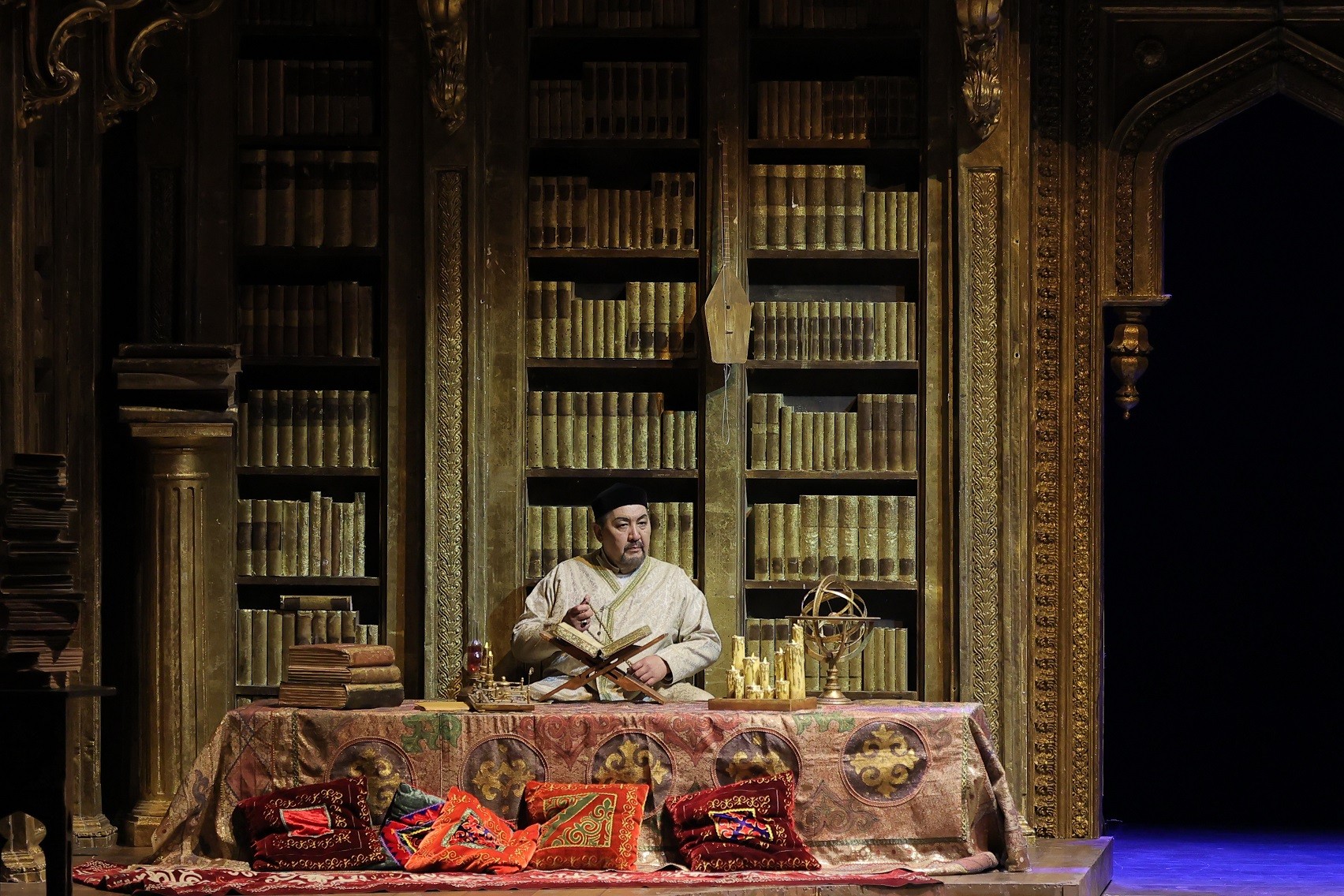
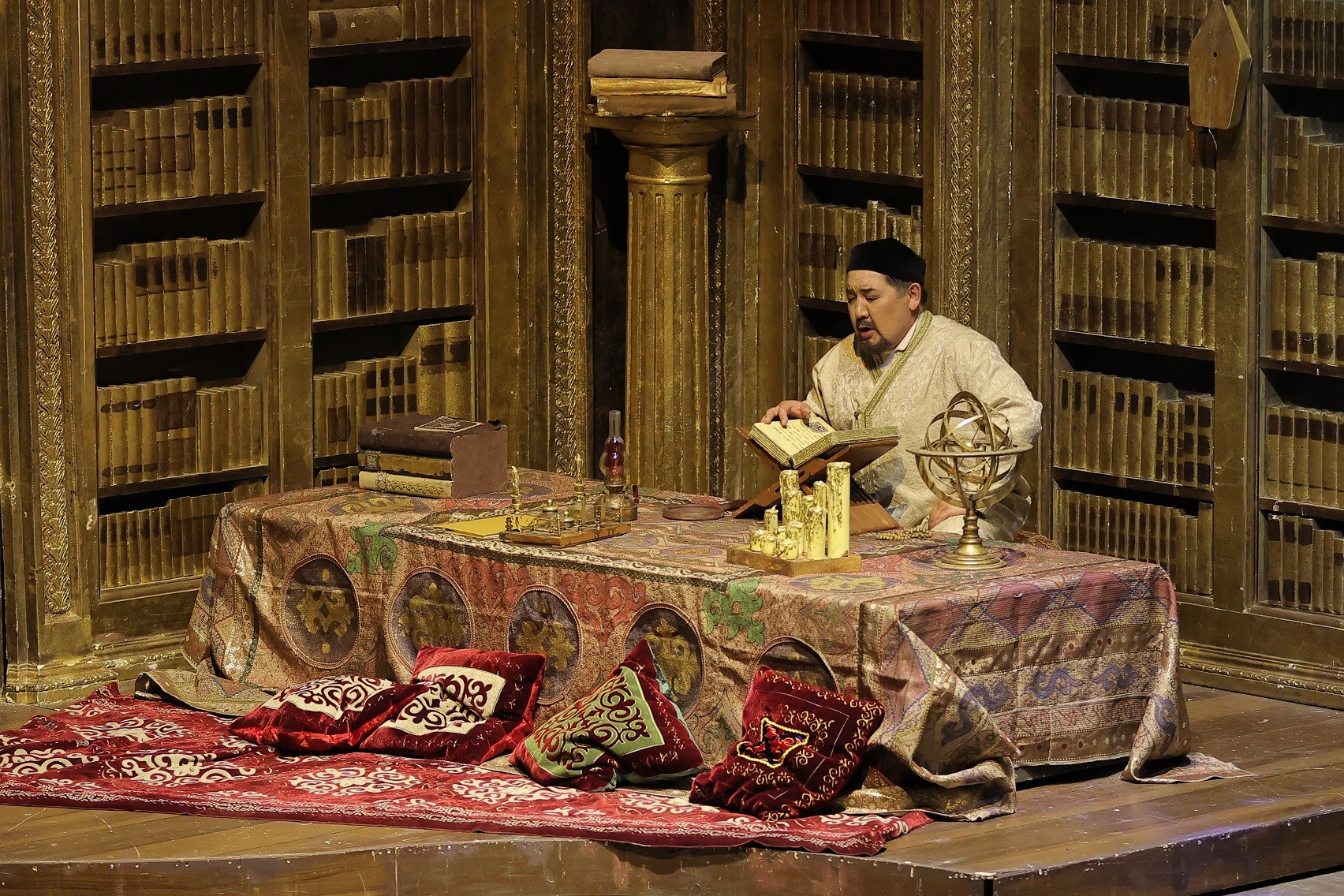
As the audience experiences Akhmet Zhubanov and Latif Khamidi’s Abai at the Astana Opera, the stirring arias allow the pages of Mukhtar Auezov’s epic novel to unfold before their very eyes. The libretto does not merely recount the story; it breathes new life into it. The library scene alone, a poignant symbol of Abai’s inner world, carries a profound impact. A similar adaptation occurs with Yevgeniy Brussilovsky’s Qyz Zhibek, where the Kazakh national poem resonates within the opera house walls through Gabit Musrepov’s libretto. Ultimately, the opera-goer embarks upon the same journey as the reader, yet their emotions are heightened by the grandeur of the orchestra, the artistry of the performers, and the evocative stage design.
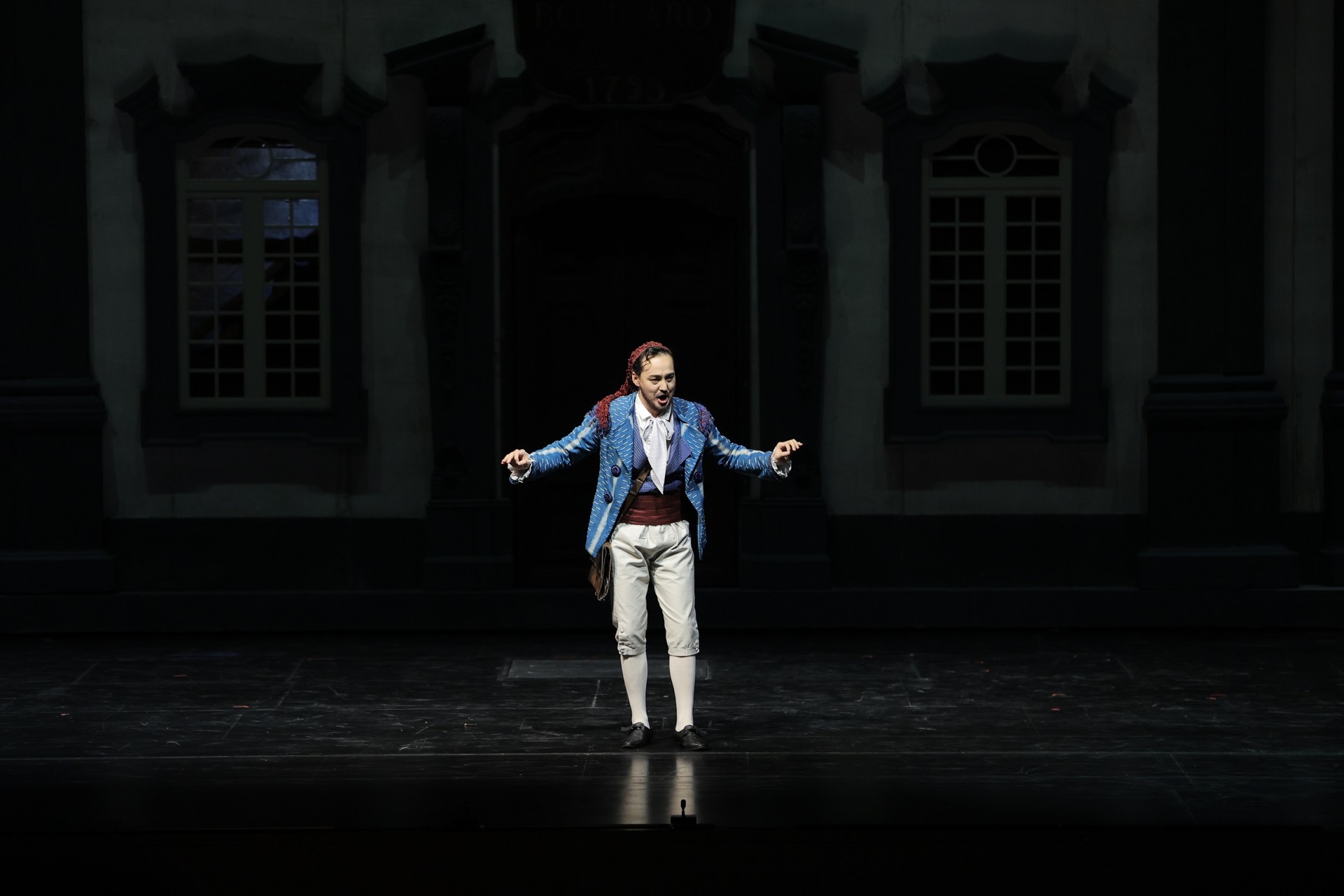
Committed to the highest standards of the national repertoire, the Astana Opera also brings its distinctive artistry to the great works of world literature. Puccini’s Madama Butterfly serves as a striking example. Behind the poignant tale of Cio-Cio-san lies David Belasco’s drama Madame Butterfly: A Tragedy of Japan (itself based on John Luther Long’s short story Madame Butterfly, which, in turn, was based on stories told to Long by his sister Jennie Correll, and on the semi-autobiographical French novel Madame Chrysanthème by Pierre Loti). It was masterfully adapted into an operatic libretto by Luigi Illica and Giuseppe Giacosa. Similarly, the celebrated Il Barbiere di Siviglia is, in essence, Pierre Beaumarchais’s comedy. Yet here, the protagonists speak the language of Rossini. Cesare Sterbini’s libretto preserved all the wit and effervescence of the original. Today, as the audience delights in Figaro’s antics, they applaud both the composer and the 18th-century French playwright. Furthermore, the foundations of Puccini’s Turandot can be traced back to the 12th-century Persian poet Nizami, whose verses featured in 18th-century European anthologies of Persian tales. It was from these very collections that the Italian playwright Carlo Gozzi drew inspiration for his ‘fable for the theatre’.
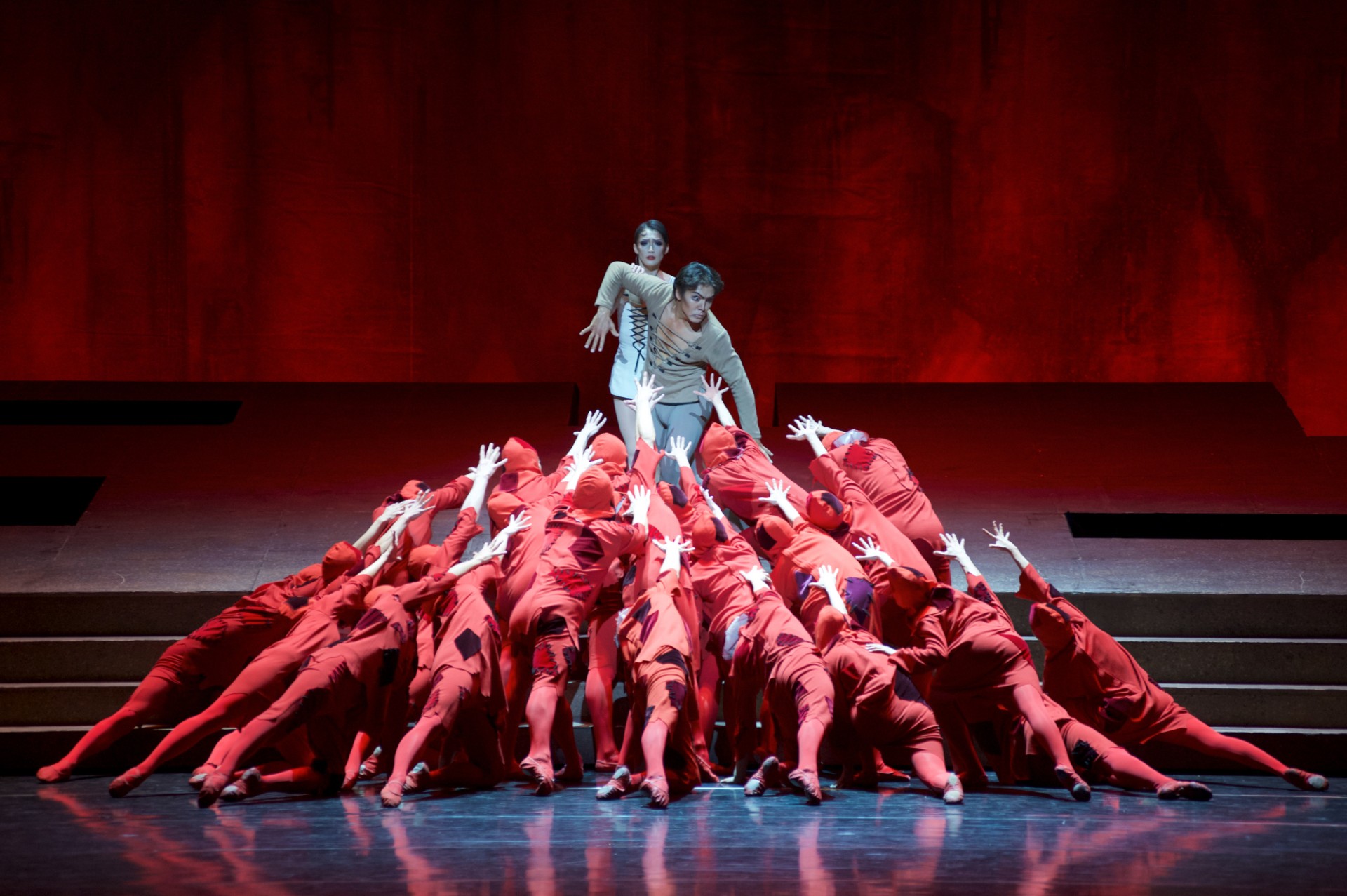
The opera house’s ballet repertoire similarly serves as a living illustration of literary masterpieces. A beloved winter highlight, The Nutcracker – staged in Yuri Grigorovich’s celebrated choreography – draws directly from E.T.A. Hoffmann’s dark and fantastical tale. Without this narrative foundation, one cannot truly grasp how a humble toy might defeat the Mouse King. Likewise, when Roland Petit’s Notre Dame de Paris graces the stage, the audience instantly recognises the vivid imagery of Victor Hugo’s novel – from Esmeralda’s spirited dances to the tragic resolution beneath the cathedral walls.
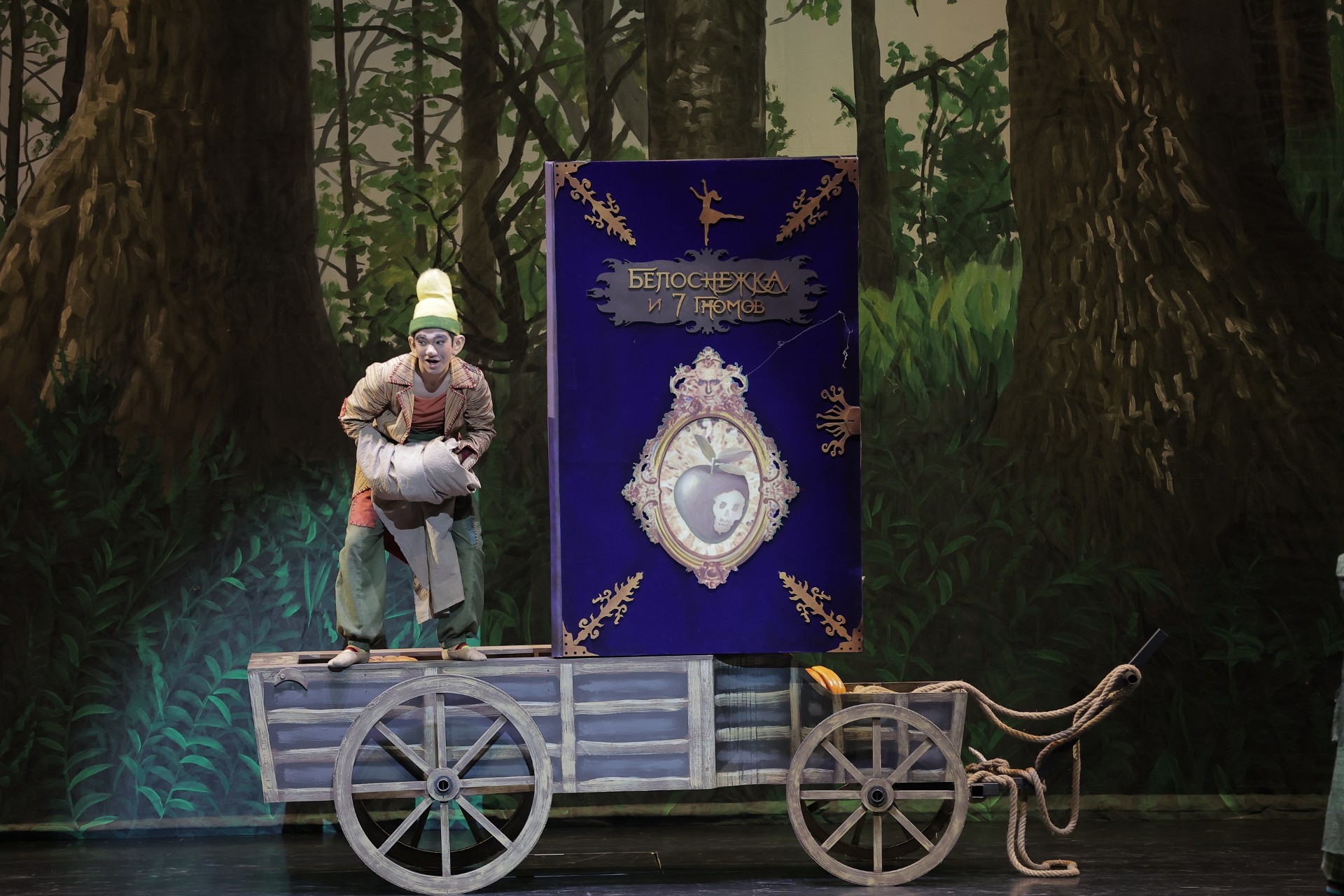
Even the Astana Opera’s repertoire for children is built upon the foundation of literature. César Cui’s fairy-tale opera Puss in Boots, set to Marina Pol’s libretto, remains faithful to Charles Perrault, while Gyula Harangozo’s Snow White and the Seven Dwarfs draws directly from the Brothers Grimm. In this way, the opera house introduces young audiences to the evocative idea that a book and a performance are two doors opening into the very same story.
The artists of Astana Opera understand this connection better than anyone. When preparing for a role, they turn first to the original literary source. Without this, it is impossible to truly grasp the character’s psyche or the author’s unique voice. A ballerina performing Giselle will return to the legend of les Wilis, while an opera soloist preparing the role of Violetta rediscovers Alexandre Dumas fils’ La Dame aux Camélias.
When asked what they enjoy in their leisure time, the artists’ responses were as diverse as their repertoire. Many turn to Abai’s Words of Edification and Kazakh poetry; some favour detective fiction, while others are engrossed in philosophical and psychological works. Others still seek out specialised literature to further their professional growth, viewing their work at Astana Opera as a continuous educational journey. “The first book directly related to my career was Giuseppe Valdengo’s Ho cantato con Toscanini,” shared opera soloist Rassul Zharmagambetov. “I drew many invaluable insights from it – from stage presence to the technicalities of where to stand to ensure the voice projects perfectly throughout the auditorium.”
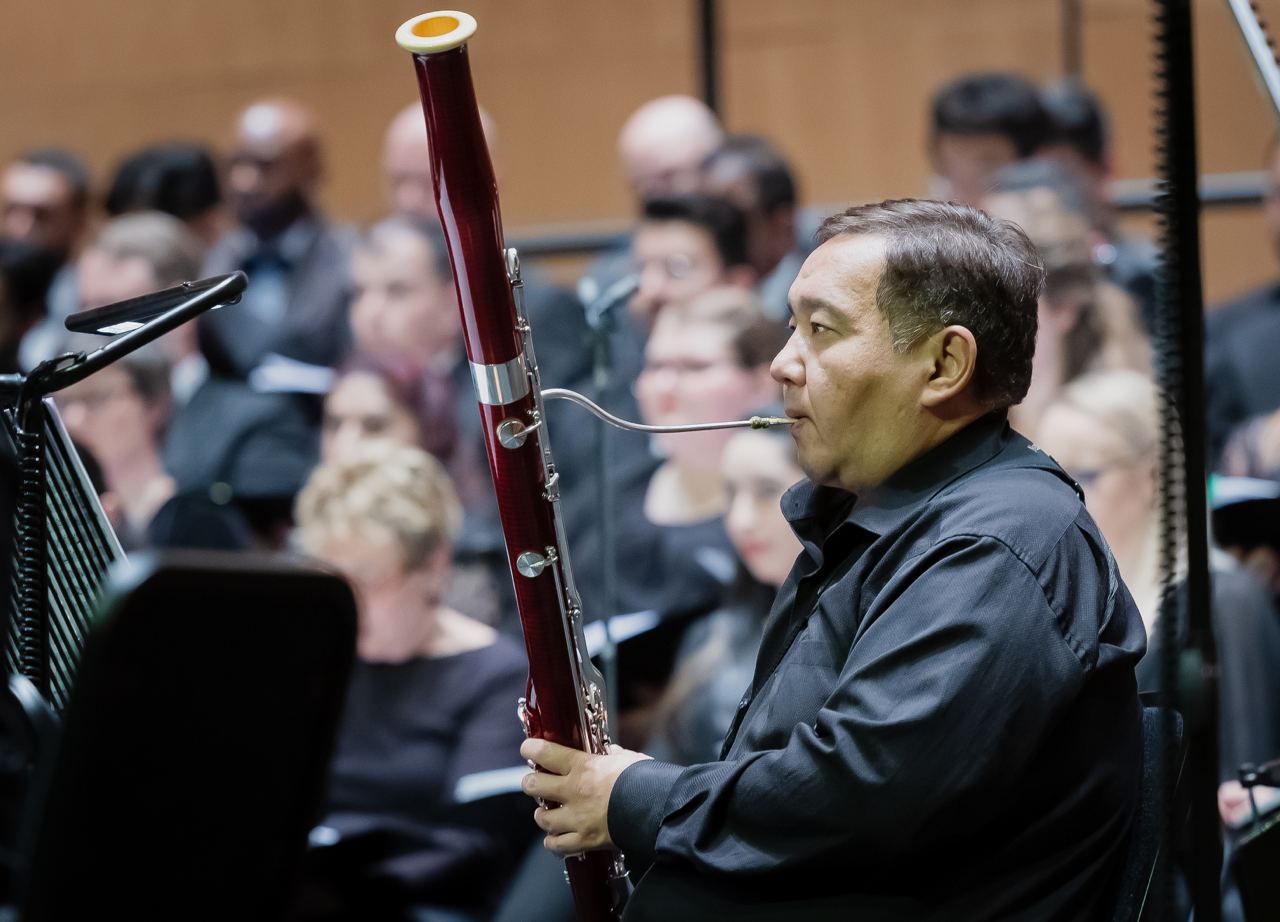
His colleague, Asset Neldybayev, principal bassoon of the Astana Opera Symphony Orchestra, recalls a childhood fascination with Astrid Lindgren’s Karlsson på taket series. “Not the condensed version seen in animated adaptations, but the full, unabridged trilogy. It was a true discovery for me – a sprawling, warm, and slightly rebellious adventure that has stayed with me throughout my life. As I grew older, I developed a passion for detective fiction, particularly the classics. Agatha Christie is in a category of her own. I can revisit her novels repeatedly without them ever losing their charm. The same is true of Alexandre Dumas; it all began, naturally, with Les Trois Mousquetaires,” the musician noted. “In terms of contemporary literature, I found myself captivated by Bernard Werber. It happened by chance when someone gave me a copy of L’Empire des Anges. I read it in a single sitting, staying up half the night, despite not usually being a fan of the genre. I later explored Les Fourmis and La Révolution des fourmis – works that are quite esoteric and philosophical. It was unexpectedly enthralling, though if I were to choose what truly speaks to my heart, it remains detective novels and historical literature.”
It is a common sight to encounter both artists and staff members with a book in hand throughout the opera house.
“I extend my warmest congratulations to everyone on National Book Day, a milestone that reminds us that great literature is the foundation of our intellectual growth,” stated Alexandr Sovostyanov, general director of the Astana Opera. “As books open on 23 April, one might reflect that, at that same moment, a curtain is rising here at the Astana Opera. The very same story may be unfolding upon our stage, reimagined through the artistry of the orchestra, opera soloists, and ballet company. We welcome everyone to experience these beloved works anew; after all, these stories do not end on the final page a book, but continue to live and flourish upon our stage.”