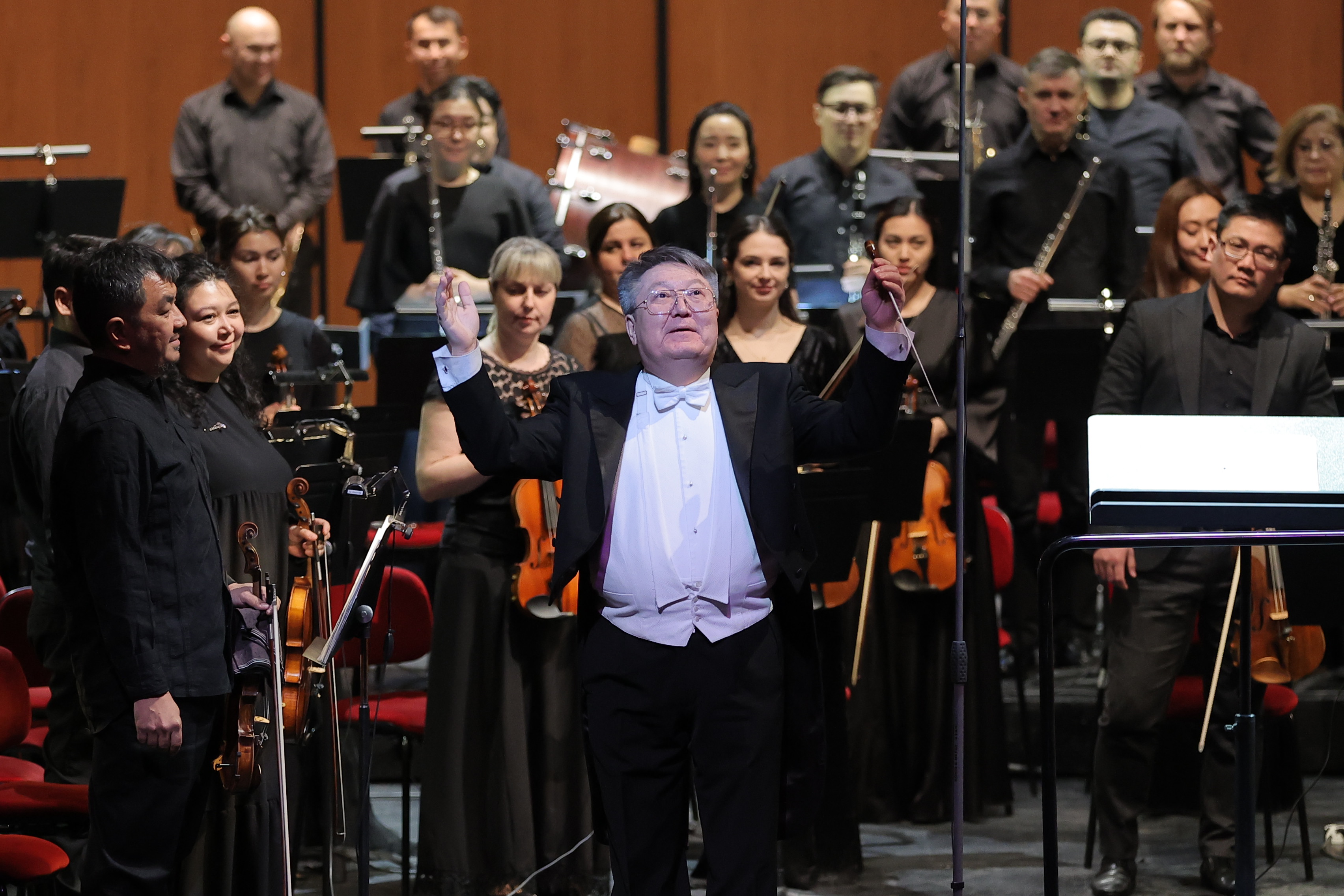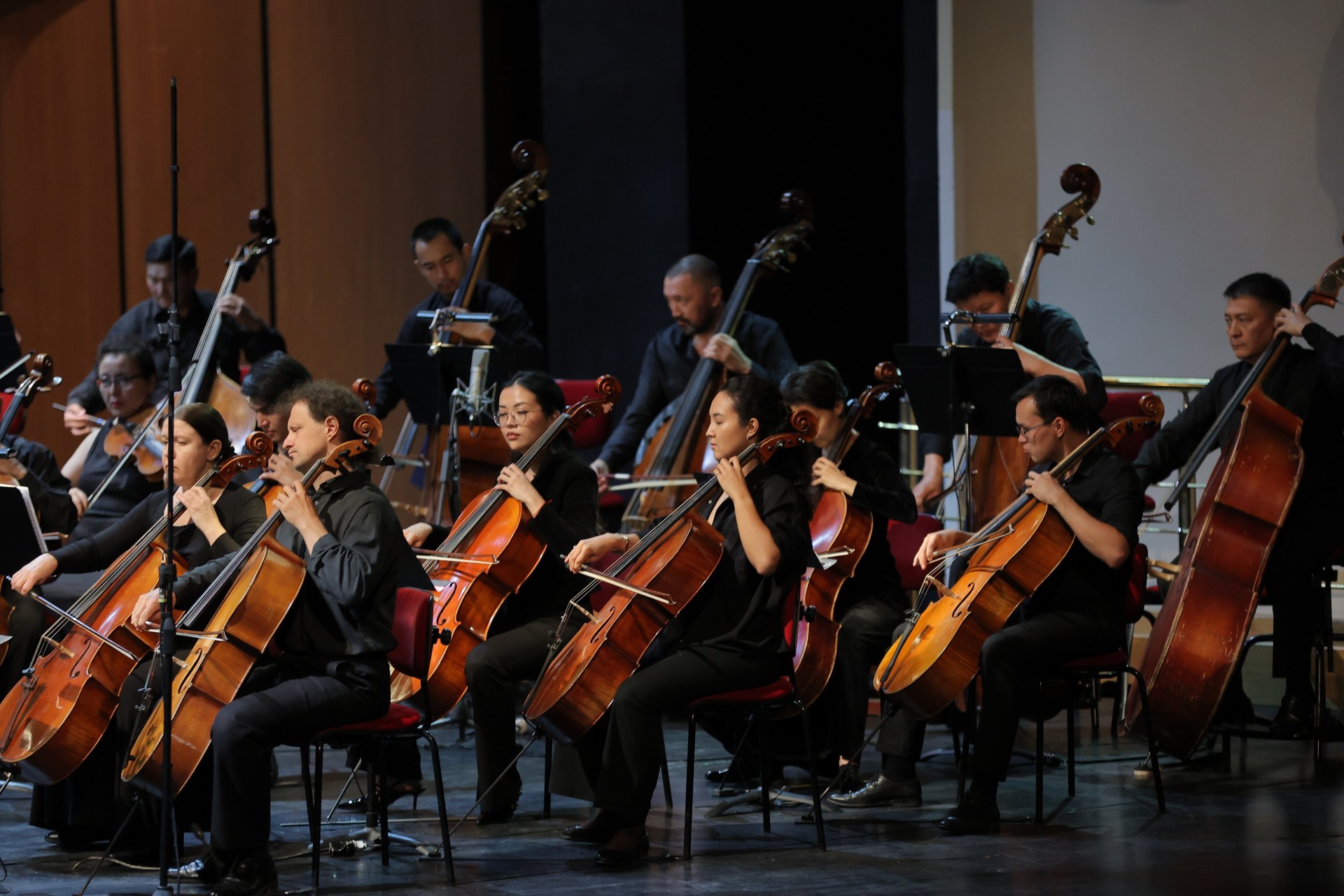

The soloists and chamber orchestra of the Astana Opera will present the Vivaldi & Piazzolla programme on 6 July in the Astana Opera’s Grand Hall, as part of the Operaliya International Festival. Both composers’ iconic seasonal cycles will be performed under the baton of Maestro Abzal Mukhitdin, People’s Artist of Kazakhstan.
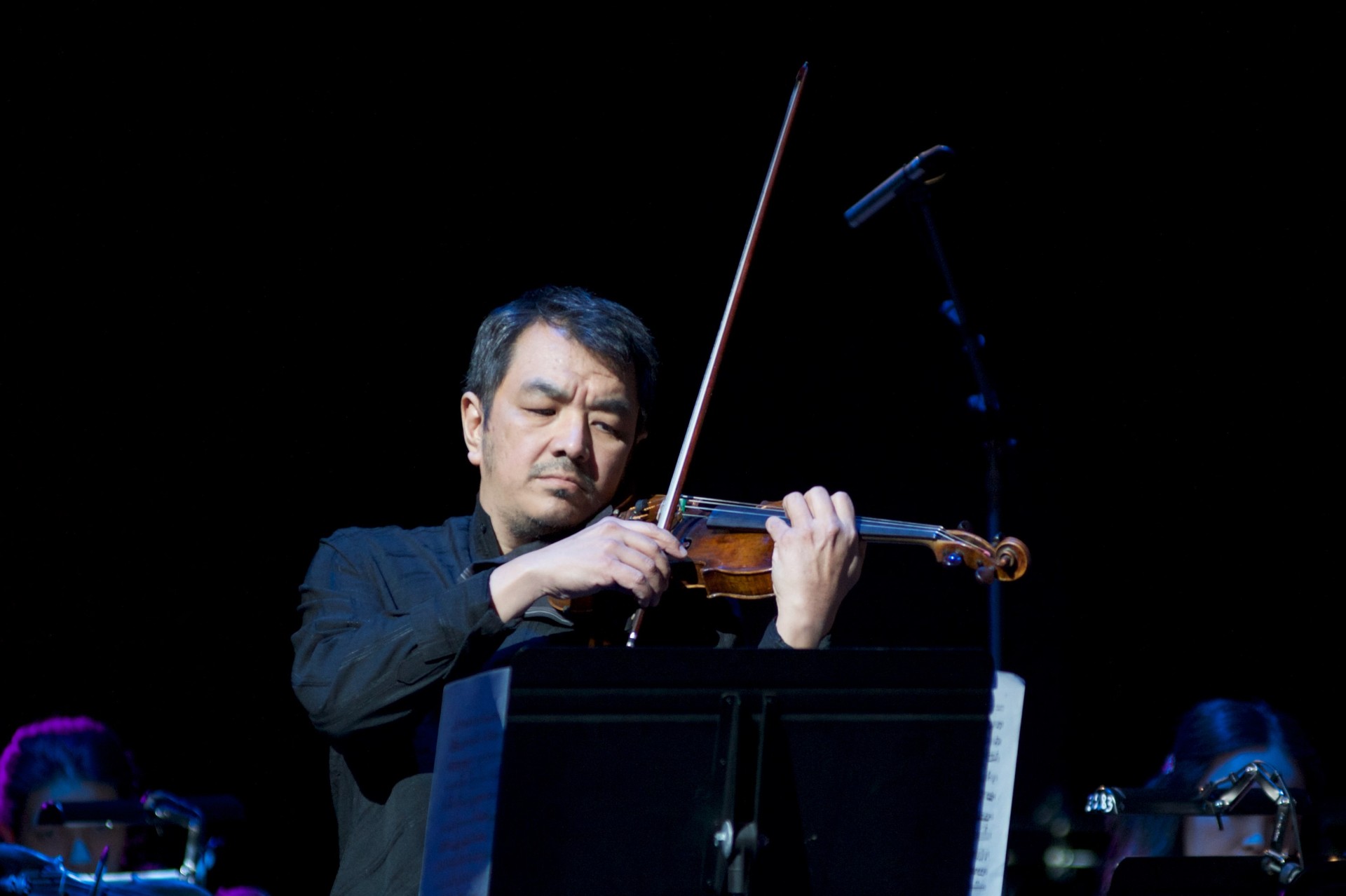
While classical programmes are traditionally structured around a single opus, this concert will offer audiences two grand, contrasting cycles by Antonio Vivaldi and Astor Piazzolla, each providing a unique interpretation of nature’s eternal cycle. The featured soloists are the virtuosic violinist Bagdat Abilkhanov, Honoured Worker of Kazakhstan, and the brilliant violinist Anel Shakirova.
The concert will open with a cornerstone of Western classical music: Antonio Vivaldi’s Le Quattro Stagioni (1723), widely regarded as one of the finest masterpieces of the Baroque era and an indisputable treasure of world culture. The narrative then shifts from 18th-century Europe to 20th-century Argentina. Astor Piazzolla infused the traditional genre with a contemporary sensibility, seamlessly blending elements of jazz and academic music. His Las Cuatro Estaciones Porteñas (The Four Seasons of Buenos Aires) offers four distinct portraits of the metropolis, where melancholic yearning (Otoño) gives way to tempestuous energy (Verano). Notably, Piazzolla’s seasonal sequence is unconventional, directly reflecting the meteorological realities of the Southern Hemisphere. To complement the main programme, the evening will also feature the illustrious composer’s Café 1930 (from Histoire du Tango) and his celebrated Meditango.
“The idea of juxtaposing the seasonal cycles of Vivaldi and Piazzolla may seem obvious, but that is precisely where its depth lies,” explains violinist Anel Shakirova. “In creating his masterpiece, Vivaldi sought to capture the shifting beauty of the Venetian landscape. He succeeded so brilliantly that the theme became eternal, inspiring artists, poets, and musicians for centuries. However, Piazzolla goes further: he reimagines the classical tradition and transposes it into the distinct coordinates of his homeland, Buenos Aires. The most captivating element of Piazzolla’s cycle is this ‘interplay’ with the seasons. His summer, which falls between December and February, is steeped in a sultry languor, whilst simultaneously engaged in a polemical dialogue with Vivaldi’s Inverno (Winter). This is an intellectual contrast that the composer intentionally emphasizes. Conversely, the crisp Argentine winter (June to August), for all its static beauty, echoes the summer storms of the great Italian master.”
The violinist also noted that music serves as a universal code that requires no translation. People speaking different languages can find a common understanding through the shared experience of music-making or when connecting with harmonic beauty. True depth of appreciation, however, always demands context – an understanding of the composers’ biographies and the era in which they created.
“Remarkably, when comparing 18th-century compositions with 20th-century scores, we uncover an astonishing number of parallels. Today, Baroque music is experiencing a renaissance and is incredibly sought after by younger audiences, frequently serving as the soundtrack to countless Reels and TikToks. This is testament to how resonant Baroque music is with modern sensibilities. I am convinced that the ideal concert programme is built upon this dialectical fusion: early music and 20th-century repertoire performed in a single evening, each illuminating the other in a new light. This represents the finest juxtaposition of eras, allowing the listener to experience cultural continuity and hear the voices of the centuries converge in a single concert. It is no coincidence that our creative team strives to present such programmes on grand stages; the larger the audience, the more meaningful this dialogue becomes,” Shakirova concluded.
All the evening’s performers extended their warmest wishes to the residents of Astana ahead of the upcoming Capital City Day, inviting them to spend the festive evening experiencing the magic of live music. The artists welcomed audiences to the Astana Opera’s Grand Hall on 6 July, emphasizing that the programme has been meticulously curated to captivate both seasoned connoisseurs and newcomers alike.
The concert will begin at 5 pm.